
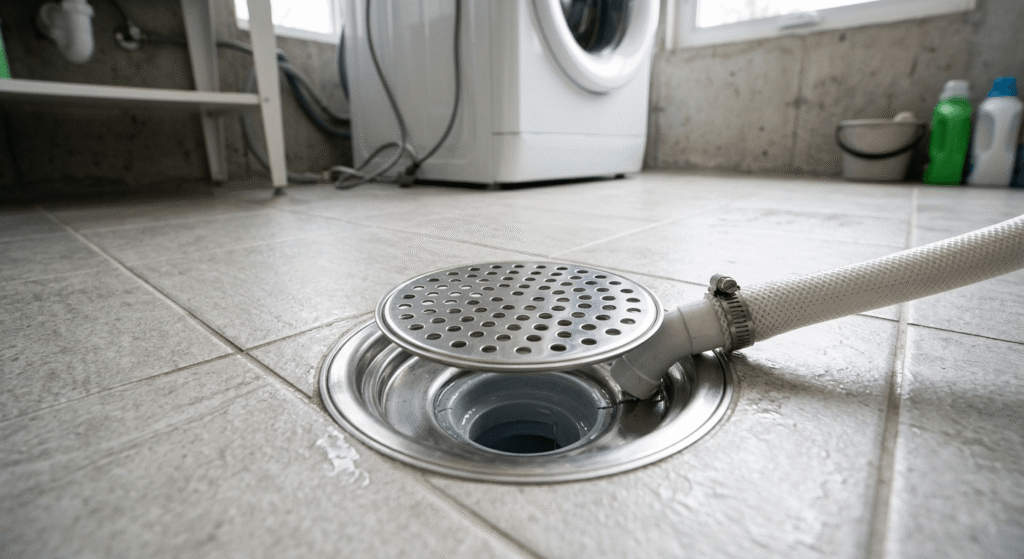
A laundry drain is the plumbing component that carries wastewater away from a washing machine during the wash and spin cycles. It connects the appliance’s discharge hose to a fixed drainage point, such as a standpipe, drain box, utility sink, or floor drain, which routes the water into the home’s drain-waste-vent (DWV) system. The laundry drain works together with a trap, vent, and drainpipe to move wastewater safely while blocking sewer gases from entering the home.
Laundry drains vary by installation type, pipe diameter, and connection method, and local plumbing codes regulate each of these factors. A washing machine discharges water at a high flow rate and temperature, so the drain must have sufficient diameter, height, and venting to handle rapid, forceful discharge without backflow or siphoning. Improper sizing or a missing air gap are common causes of leaks, gurgling, and slow drainage.
This article explains how a laundry drain functions, the main types of drain setups used in residential plumbing, and the pipe sizing and code requirements that apply to washing machine installations. It also covers how to plumb a new drain, whether venting is required, where the discharged water goes, how to drain a washing machine manually, and how to diagnose and repair the most common laundry drain problems.
What Is a Washing Machine Drain and How Does It Work?
A washing machine drain is a dedicated plumbing connection that receives wastewater pumped out of the appliance and directs it into the home’s drainage system. The washing machine’s internal pump forces water through a flexible drain hose into a standpipe, drain box, or other fixed drain fitting during the drain and spin portions of the cycle. The fixed fitting connects to a trap, which holds a water seal that blocks sewer gas, and then to a drainpipe that carries the wastewater toward the main drain line.
The drain functions as an open, non-pressurized connection rather than a sealed joint. The washing machine’s drain hose sits inside the standpipe or drain box opening without a permanent seal, which creates an air gap. This air gap prevents wastewater from siphoning back into the machine if the main drain becomes blocked. Because the pump discharges water in short, high-volume bursts, the drainpipe and trap must be sized to accept peak flow rates of approximately 15 to 20 gallons per minute without overflowing.
Drain Hose vs. Drain Pipe: What’s the Difference?
A drain hose is the flexible tube attached to the washing machine that carries water from the pump to the drain fitting, while a drain pipe is the fixed, rigid plumbing line that carries wastewater from that fitting into the home’s drainage system. The drain hose is a removable appliance part, typically made of reinforced rubber or corrugated plastic, and it inserts into the drain pipe or standpipe without a sealed connection.
The drain pipe is permanent plumbing, usually PVC or ABS, installed by a plumber and regulated by local building codes. The hose diameter is narrower than the pipe diameter, which maintains the air gap required to prevent backflow. Replacing a worn or cracked drain hose is a routine appliance repair, while modifying the drain pipe requires plumbing work and, in most jurisdictions, a permit.
Types of Washing Machine Drain Setups
The main washing machine drain types are standpipe drains, in-wall drain boxes, utility sink drains, and floor drains, each of which routes wastewater into the home’s plumbing system through a different fixture. The correct setup depends on the laundry room’s location, existing plumbing, and local code requirements. Homes with dedicated laundry rooms typically use a standpipe or drain box, while homes with plumbing added after original construction sometimes rely on a utility sink or floor drain instead.
Each setup uses the same underlying principle: an air gap between the washing machine’s drain hose and the fixed drain fitting, combined with a trap that maintains a water seal against sewer gas. The setups differ in appearance, installation cost, and how much floor space or wall space they require.
Standpipe Drains
A standpipe drain is a vertical pipe installed in the wall or floor behind the washing machine that receives the drain hose directly and channels wastewater downward into the trap and drainpipe. The washing machine’s drain hose hooks over the top of the standpipe and rests inside the opening, creating an air gap that prevents siphoning. Standpipe drains are the most common washing machine drain setup in dedicated laundry rooms because they require minimal floor space and connect directly to the DWV system.
A functional standpipe drain depends on correct height and diameter to prevent overflow during peak discharge. Builders typically install the standpipe with a P-trap positioned below the finished floor and route it to a vent to maintain proper drainage.
Drain Boxes (In-Wall Drains)
A drain box, also called an in-wall drain, is a recessed plastic or metal enclosure installed inside the wall that combines the standpipe, trap, and often the hot and cold water supply valves into a single unit. The drain box sits flush with the wall surface, which allows the washing machine to be pushed closer to the wall than a protruding standpipe allows. Builders and remodelers commonly install drain boxes in new construction and renovated laundry closets because the enclosed design improves the room’s appearance and reduces hose exposure.
Drain boxes contain the same air gap and trap components as a standard standpipe, housed within a single recessed unit. Because the trap and standpipe are combined behind the wall, repairs or clogs inside a drain box typically require removing an access panel rather than working with exposed piping.
Utility Sink Drains
A utility sink drain setup routes the washing machine’s drain hose over the edge of a laundry or utility sink instead of into a standpipe, using the sink’s drain to carry wastewater into the plumbing system. The hose rests inside the sink basin without a sealed connection, which maintains the required air gap. This setup is common in basements, garages, and older homes where a utility sink was installed before or instead of a dedicated standpipe.
A utility sink drain must have a large enough basin and drain capacity to handle the washing machine’s peak discharge rate without overflowing. Some jurisdictions require a hose clamp or bracket to secure the drain hose inside the sink to prevent it from dislodging under water pressure.
Floor Drains
A floor drain setup channels washing machine wastewater directly into a drain opening installed in the laundry room floor, typically used in basements or utility rooms with a floor-level plumbing connection. The washing machine’s drain hose empties onto the floor near the drain, or into a fitting attached to the floor drain, rather than into a raised standpipe. Floor drains rely on gravity and a floor slope toward the drain opening to move wastewater away from the appliance.
This setup requires its own trap, typically installed below the floor, to block sewer gas from entering the room. Floor drains used for laundry discharge require periodic cleaning because lint and debris that would otherwise pass through a standpipe trap can settle in the floor drain’s basin.
Washing Machine Drain Pipe Sizing and Code Specifications
Washing machine drain pipe sizing and code specifications establish the minimum pipe diameter, standpipe height range, and hose-to-pipe fit required for a compliant laundry drain installation. Most residential plumbing codes, including the International Plumbing Code (IPC) and the Uniform Plumbing Code (UPC), classify a washing machine as a fixture requiring its own trap and a minimum drainpipe diameter to handle its discharge rate. These specifications prevent overflow, siphoning, and backflow during the appliance’s drain cycle.
Local code amendments can adjust specific figures, so a licensed plumber should confirm requirements for a given jurisdiction before installation. The following sizing and height figures reflect commonly applied residential standards.
Standard Drain Pipe Diameter
The standard washing machine drain pipe diameter is 2 inches, which most residential plumbing codes require to accommodate the appliance’s peak discharge rate. A 2-inch trap and drainpipe provide enough capacity to prevent water from backing up out of the standpipe during the pump’s high-volume discharge cycle. Some older installations use a 1.5-inch drain, but current code in most jurisdictions specifies 2 inches for a washing machine standpipe and trap.
Undersized drainpipes are a common cause of overflow at the standpipe opening, particularly in homes with older plumbing that predates current code minimums.
Standpipe Height Requirements (Rough-In)
Standpipe height requirements specify that the standpipe extends a minimum of 18 inches and a maximum of 42 inches above the trap weir, with the trap itself installed between 6 and 18 inches above the finished floor. These figures come from the standpipe height ranges referenced in the IPC and UPC for laundry tray and washing machine standpipes. A standpipe installed below the minimum height increases the risk of water splashing out during discharge, while a standpipe installed above the maximum height can reduce drainage efficiency and trap seal performance.
Rough-in height also affects hose length: most washing machine drain hoses are designed to reach a standpipe opening within this 18-to-42-inch range without excessive slack or tension.
Drain Hose Size vs. Pipe Size
A washing machine drain hose is smaller in diameter than the drain pipe it empties into, typically measuring around 7/8 to 1 inch, compared with the standard 2-inch drain pipe. This difference in diameter is intentional and required by code, since it creates the air gap needed to prevent wastewater from siphoning back into the washing machine if the drain becomes blocked downstream. Inserting a hose that fits too tightly inside the standpipe, or sealing the connection, removes this air gap and violates plumbing code in most jurisdictions.
Replacement drain hoses should match the appliance manufacturer’s specified diameter rather than the drainpipe diameter, since the hose and pipe serve different functions in the connection.
How to Plumb a Washing Machine Drain
Plumbing a washing machine drain requires installing a P-trap, a vertical standpipe or drain box, and a vent connection that ties into the home’s existing DWV system at a code-compliant height and distance. The installation begins with locating the drain line and determining whether the laundry area has existing rough-in plumbing or requires a new branch line from the main stack. A plumber cuts into the drain-waste-vent system, installs a sanitary tee to accept the new branch, and runs 2-inch drainpipe to the laundry location.
The trap installs at the base of the standpipe, positioned 6 to 18 inches above the finished floor, followed by the standpipe itself extending 18 to 42 inches above the trap weir. The vent connects either to an existing vent stack within the maximum allowable distance from the trap or through an air admittance valve where code permits. After installation, the plumber tests the connection by running the washing machine through a full cycle and checking for leaks, splashing, or slow drainage at the standpipe. Local code typically requires a permit and inspection for new drain installations, since incorrect trap or vent placement can allow sewer gas into the home.
Does a Washing Machine Drain Need a Vent?
Yes, a washing machine drain needs a vent to allow air into the drainage system, equalize pressure, and prevent the trap from siphoning dry during discharge. Without a vent, the rapid, high-volume flow from the washing machine’s pump can create negative pressure in the drainpipe, pulling water out of the trap and allowing sewer gas to enter the home. Most residential plumbing codes require every fixture trap, including a washing machine standpipe trap, to connect to a vent within a specified distance.
The vent can be a traditional vent stack that runs through the roof or a mechanical air admittance valve (AAV) installed near the trap, depending on what local code allows and how far the laundry drain sits from existing venting.
Why Unvented Drains Gurgle or Siphon
An unvented or improperly vented washing machine drain gurgles or siphons because the trap loses its water seal when negative pressure pulls air, and sometimes water, backward through the drain line. During the pump’s discharge cycle, water moving quickly through the drainpipe can create a vacuum behind it if no vent supplies replacement air. This vacuum pulls air bubbles up through the trap, producing a gurgling sound, and in more severe cases pulls enough water out of the trap to break the seal entirely.
A broken trap seal allows sewer gas to enter the laundry room, which produces a persistent sewage odor even when the washing machine is not running. Repeated gurgling during the spin or drain cycle is one of the earliest signs of an inadequate or missing vent.
Air Admittance Valves vs. Traditional Vent Stacks
An air admittance valve (AAV) is a mechanical, one-way valve that admits air into the drain line to relieve negative pressure, while a traditional vent stack is a pipe that runs vertically through the roof to provide continuous outside air. An AAV opens under negative pressure to let air in and closes to block sewer gas from escaping, which allows installation without cutting a new roof penetration. A traditional vent stack provides passive, continuous ventilation and is required in some jurisdictions for primary fixture vents, though many codes permit an AAV for secondary or difficult-to-vent fixtures such as a laundry standpipe.
AAVs cost less to install than a roof vent stack and work well for renovations where running new venting to the roof is impractical, but they are mechanical parts that can fail over time and require access for replacement. Local code determines whether an AAV is permitted for a given installation, so confirmation from the local building department is necessary before choosing between the two options.
Where Does Washing Machine Drain Water Go?
Washing machine drain water goes into the home’s drain-waste-vent system, which carries it to either a municipal sewer system or a private septic system, depending on the property’s wastewater infrastructure. From the standpipe or drain fixture, wastewater flows through the trap and branch drainpipe into the main drain line, joining wastewater from other fixtures such as sinks and toilets before leaving the house. The destination beyond the home’s plumbing depends entirely on whether the property connects to a public sewer main or an on-site septic system.
Laundry wastewater, known as greywater, contains detergent, lint, and fabric residue, which affects how some systems, particularly septic systems, handle the discharge over time.
Draining Into the Sewer or Municipal System
A washing machine connected to a municipal sewer system drains wastewater through the home’s branch and main drain lines into the city or county sewer main, which transports it to a wastewater treatment facility. Municipal systems are designed to handle continuous residential greywater discharge, including detergent and lint, without requiring homeowner-level treatment before the water leaves the property. Connection to a municipal sewer typically involves fewer restrictions on detergent type or discharge volume than a septic system does.
Homes on municipal sewer service still require a properly sized and vented laundry drain, since undersized or unvented connections can cause backups regardless of the treatment method downstream.
Washing Machines and Septic Systems
A washing machine connected to a septic system discharges wastewater into the septic tank, where solids and lint settle or break down before the remaining liquid disperses into the drain field. Septic systems process laundry wastewater differently than a municipal sewer, since the tank relies on bacterial activity to break down waste, and excess detergent, bleach, or lint can disrupt that bacterial balance over time. Homeowners on septic systems are commonly advised to use low-sudsing, septic-safe detergent and to space out large laundry loads rather than running multiple loads consecutively, which can temporarily overload the tank’s capacity.
A lint filter or trap installed inline with the washing machine drain reduces the amount of fabric debris entering the septic tank and drain field, which helps prevent field clogging over the system’s service life.
Is It Legal to Drain a Washing Machine Outside?
Draining a washing machine outside directly onto the ground or into a storm drain is illegal in most jurisdictions because laundry wastewater is classified as greywater and requires treatment before disposal, even though it is less contaminated than blackwater from toilets. Local health and building codes generally require greywater to enter a sanitary sewer, septic system, or an approved greywater treatment and dispersal system rather than draining onto the surface or into a stormwater system, which is designed for rainwater rather than wastewater. Discharging directly into a storm drain is prohibited in nearly all municipalities because stormwater systems typically empty into natural waterways without treatment.
Some jurisdictions permit regulated greywater systems that filter and disperse laundry water for irrigation, but these systems require a permit and must meet specific design standards rather than allowing an unregulated hose discharge outdoors.
Dry Wells and French Drains as Alternatives
A dry well or French drain is a subsurface drainage structure that can be used, where locally permitted, to disperse treated or filtered greywater into the surrounding soil instead of connecting to a sewer or septic system. A dry well is typically a gravel-filled pit or perforated chamber that allows water to percolate into the ground, while a French drain is a trench containing a perforated pipe surrounded by gravel that distributes water along its length. These systems are sometimes used for laundry greywater in rural properties without sewer or septic access, but they require permitting in most jurisdictions and typically require the water to pass through a filter before dispersal.
Because a dry well or French drain lacks the biological treatment provided by a septic tank, code officials generally restrict their use for laundry water to specific soil conditions and setback distances from wells, property lines, and water bodies.
How to Drain a Washing Machine Manually
Draining a washing machine manually involves disconnecting the machine from power, locating the internal drain pump filter or drain hose, and releasing standing water into a container or floor drain before disconnecting the appliance. Most washing machines hold residual water in the drum and internal hoses even after a cycle ends, so manual draining is necessary before moving, servicing, or repairing a machine that will not complete its normal drain cycle. The exact method depends on the machine type: front-load washers typically have an accessible drain pump filter near the bottom front panel, while top-load washers may require disconnecting the drain hose directly.
Manual draining should always begin with unplugging the washer and shutting off the water supply valves to prevent electric shock and unexpected water flow during the process.
Draining for a Move
To drain a washing machine before a move, run a final rinse and spin cycle if the machine functions normally, then disconnect the drain hose and empty any remaining water into a bucket or floor drain. After the final cycle, shut off the hot and cold water supply valves and disconnect the fill hoses, allowing any residual water in the hoses to drain into a towel or shallow container. The drain hose should be removed from the standpipe or drain box last, since it may still hold a small volume of water that needs to empty into a bucket before the machine is moved away from the wall.
Securing the drain and fill hoses to the machine’s back panel with tape or zip ties after disconnection prevents dripping during transport.
Draining a Broken Washing Machine That Won’t Cycle
Draining a broken washing machine that will not cycle requires manually accessing the internal drain pump filter or drain hose to release trapped water, since the machine cannot complete its normal pump-and-drain sequence. On most front-load washers, a small access panel near the bottom front of the machine reveals the drain pump filter; placing towels and a shallow pan beneath the panel before opening it catches the water that flows out as the filter is loosened. Top-load washers without an accessible filter typically require disconnecting the drain hose directly at the pump or standpipe connection, using a container to catch the water as it releases.
Water trapped in a non-cycling washing machine can weigh significantly more than expected, so supporting the appliance and working slowly when disconnecting hoses reduces the risk of sudden spills or strain injury.
Common Washing Machine Drain Problems and How to Fix Them
Common washing machine drain problems include clogged drain hoses or pipes, missing wall drain connections, and improper use of drain-clearing tools, each of which produces distinct symptoms such as slow drainage, standing water, or leaks at the standpipe. Diagnosing the correct cause before attempting a repair prevents unnecessary disassembly and reduces the risk of damaging the appliance or the plumbing. Most laundry drain issues fall into one of three categories: a physical blockage, a missing or incompatible drain connection, or damage caused by an inappropriate cleaning tool.
Clogged Drain Hose or Pipe
A clogged drain hose or pipe causes water to drain slowly from the washing machine, back up into the drum, or overflow at the standpipe, and it is typically caused by lint, fabric debris, or a small object obstructing the hose or pipe interior. Lint and small debris accumulate gradually inside the drain hose, particularly near the pump connection, and can also collect inside the standpipe or trap over time. Symptoms include water pooling in the bottom of the washer after a completed cycle, a burning or straining sound from the pump, or water backing up out of the standpipe during discharge.
Clearing a clogged drain hose typically involves disconnecting it from the pump and standpipe and flushing it with water or a flexible brush, while a clog inside the standpipe or trap may require a plumbing snake inserted from the drain opening.
Washing Machine Doesn’t Have a Drain Pipe on the Wall
A washing machine without a drain pipe on the wall requires either installing new standpipe plumbing or connecting the drain hose to an existing fixture such as a utility sink or floor drain as a temporary or alternative solution. Homes without a pre-existing laundry drain rough-in, common in converted spaces such as garages or closets repurposed for laundry use, need a plumber to run new branch drainpipe, a trap, and venting to a code-compliant standpipe or drain box. Where permanent plumbing installation is not immediately possible, routing the drain hose into a nearby utility sink or floor drain provides a functional, though less permanent, alternative.
Draining a washing machine into a location without a proper trap and vent, such as directly into a floor drain lacking its own trap, risks sewer gas entering the room and should be corrected by a licensed plumber.
Safe Use of Drain Snakes and Cleaners
Safe use of drain snakes and cleaners on a washing machine drain requires selecting tools sized for the pipe diameter and avoiding corrosive chemical cleaners that can damage PVC pipe, rubber hose components, or the trap seal. A flexible hand-crank or motorized drain snake sized for a 1.25 to 1.5-inch line clears most lint and debris clogs inside a drain hose without damaging the interior wall of the hose. For clogs inside a 2-inch standpipe or trap, a larger drain auger designed for that diameter is more effective and less likely to become lodged.
Chemical drain cleaners, particularly those containing sodium hydroxide or sulfuric acid, are generally not recommended for washing machine drains because they can degrade rubber hose material and are less effective against lint-based clogs than mechanical clearing. Enzyme-based drain treatments provide a lower-risk alternative for routine maintenance of lint buildup inside the trap and standpipe.