
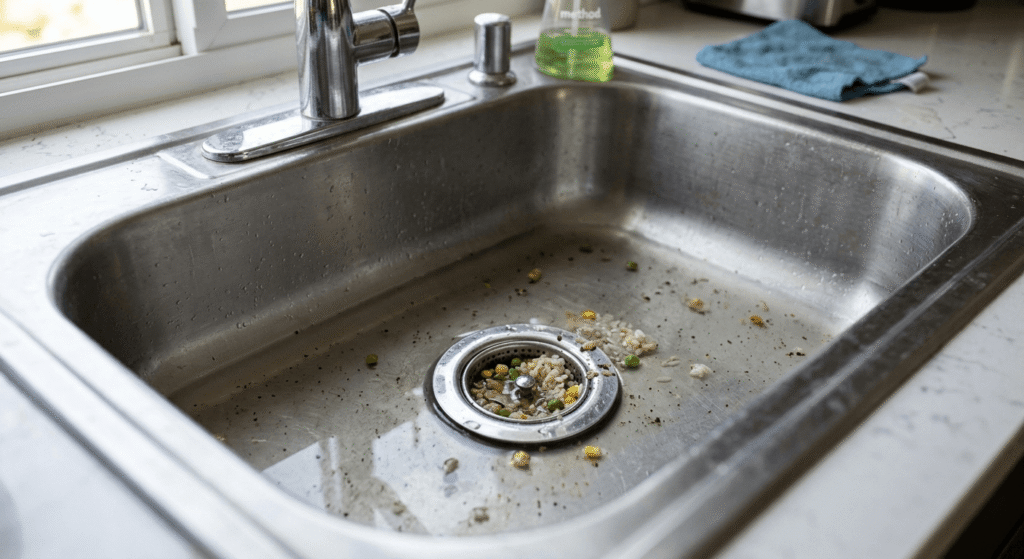
A clogged drain occurs when material inside a pipe restricts or blocks the flow of water. The blockage can form gradually through the buildup of hair, grease, soap residue, and mineral deposits, or it can occur suddenly when a foreign object lodges inside the pipe. Household drains connect to a network of pipes that carry wastewater to a municipal sewer line or a septic system, and any narrowing or obstruction along that path reduces drainage speed.
Clogs develop in kitchens, bathrooms, laundry rooms, and floor drains, and each location tends to collect different materials. Kitchen drains accumulate grease and food particles, while bathroom drains collect hair and soap scum. Outdoor and basement drains face additional risks from tree roots and structural pipe damage. The underlying cause determines whether a clog can be cleared with a plunger or drain snake or whether it requires professional plumbing equipment.
Early signs of a clogged drain include slow drainage, gurgling sounds, foul odors, and standing water. These symptoms indicate a partial blockage before the drain stops functioning entirely. Addressing a clog at this stage prevents pipe damage, water backups, and the need for costly repairs.
This article explains the common causes of clogged drains, the warning signs that indicate a blockage, the types of drains most affected, methods for clearing a clog, and prevention practices that reduce the frequency of future blockages.
Common Causes of a Clogged Drain
A clogged drain results from the accumulation of hair, soap scum, grease, food debris, foreign objects, mineral deposits, or tree roots inside a pipe. Each cause narrows the interior diameter of the pipe or creates a physical obstruction that blocks water flow. Some causes build up gradually over weeks or months, while others create an immediate blockage after a single incident, such as flushing a non-flushable item.
The location of a drain influences which cause is most likely. Bathroom drains face hair and soap scum, kitchen drains face grease and food particles, and older or outdoor pipes face mineral scale and root intrusion. Identifying the specific cause determines the correct removal method and the prevention steps needed to stop the clog from recurring.
Hair and Soap Scum Buildup
Hair and soap scum buildup causes clogs by combining inside a pipe to form a dense, sticky mass that traps additional debris. Hair strands catch on rough interior surfaces or minor pipe imperfections, and soap scum, formed when soap reacts with minerals in water, adheres to the trapped hair. This combination narrows the pipe’s interior diameter with each use of the shower or sink.
Bathroom sink and shower drains experience this buildup most frequently because both hair and soap enter the drain during normal washing and grooming. The clog forms gradually, so drainage speed decreases over several weeks before the pipe blocks completely. A drain that slows only in the shower or bathroom sink, while other drains remain unaffected, points to this cause specifically.
Grease, Fat, and Food Debris
Grease, fat, and food debris cause clogs when they cool and solidify inside kitchen pipes after being poured down the drain. Cooking grease and fat remain liquid at high temperatures but harden into a solid or semi-solid coating as they cool inside the pipe. Food particles, coffee grounds, and starchy residue from rice or pasta stick to this coating and accumulate into a blockage.
Kitchen sink drains connected to a garbage disposal face this cause most often, since the disposal breaks food into smaller pieces that still combine with grease residue on pipe walls. The resulting blockage typically forms near the trap beneath the sink, where the pipe bends and grease deposits collect most easily.
Foreign Objects and Non-Flushable Items
Foreign objects and non-flushable items cause clogs by physically obstructing a pipe’s interior, often at a bend or narrowing in the pipe path. Toilet paper degrades in water, but items such as wet wipes, paper towels, sanitary products, cotton swabs, and dental floss do not break down and can lodge in place. Small objects like toys, jewelry, or hygiene product packaging create the same effect when they enter a sink or toilet drain.
This cause typically produces a sudden and complete blockage rather than a gradual slowdown. A toilet that stops draining after a single flush, or a sink that blocks immediately after an item falls in, indicates a foreign object obstruction rather than gradual buildup.
Mineral Buildup and Hard Water Deposits
Mineral buildup and hard water deposits cause clogs when dissolved calcium and magnesium in water form solid scale on the interior walls of a pipe. Hard water contains higher concentrations of these minerals than soft water, and the mineral content precipitates out of the water over time, coating the pipe surface. The scale layer thickens with continued water use, narrowing the pipe’s usable diameter.
Homes supplied by hard water sources experience this cause more frequently, and the buildup affects fixtures such as faucets, showerheads, and water heaters in addition to drain pipes. Unlike hair or grease clogs, mineral scale forms a hard, chalky deposit that cannot be removed with a plunger and often requires a descaling treatment or professional cleaning.
Tree Root Intrusion and Aging Pipes
Tree root intrusion and aging pipes cause clogs when roots grow into small cracks or joints in underground sewer lines, or when deteriorating pipe material collapses or corrodes internally. Tree roots seek out moisture and nutrients, and a sewer line’s small leaks or loose joints provide an entry point. Once inside, roots expand and trap wastewater debris, forming a substantial blockage.
Aging pipes made from materials such as cast iron or clay corrode, crack, or shift with ground movement over decades of use, which creates the same entry points for roots and accumulated debris. This cause typically affects the main sewer line rather than an individual fixture drain, so multiple drains throughout a home slow down or back up at the same time.
Signs You Have a Clogged Drain
A clogged drain produces slow drainage, gurgling sounds, foul odors, and standing water or backups. These signs appear individually in the early stages of a clog and often occur together as the blockage worsens. Recognizing these signs early allows a partial clog to be cleared before it develops into a complete blockage.
Different signs correspond to different stages of a clog. Slow drainage typically appears first, while gurgling and odors indicate trapped air and decomposing material within the pipe. Standing water or backups signal that the blockage has become severe enough to prevent normal drainage.
Slow-Draining Water
Slow-draining water is a sign that a partial obstruction inside a pipe is restricting the flow of water. The blockage reduces the pipe’s effective diameter, so water pools in the sink, tub, or shower before it drains, rather than flowing away immediately. This sign appears gradually as the obstruction, such as hair, soap scum, or grease, continues to accumulate.
A drain that slows over several days or weeks, rather than stopping suddenly, typically indicates a buildup-based cause. Slow drainage in a single fixture points to a localized clog near that fixture’s trap, while slow drainage across multiple fixtures suggests a blockage further along the shared pipe system.
Gurgling Sounds From Pipes
Gurgling sounds from pipes occur when trapped air escapes through standing water in a partially blocked drain. A clog restricts the pipe’s airway along with its water path, so air displaced by draining water cannot flow through normally and instead bubbles back up through the water in the trap. The result is an audible gurgling or bubbling noise during or after drainage.
This sign often accompanies slow drainage and indicates that the blockage has narrowed the pipe enough to disrupt normal airflow. Gurgling from a drain not currently in use, such as a nearby sink gurgling while a toilet flushes, suggests a blockage in a shared vent or main line rather than an isolated fixture clog.
Foul Odors Coming From Drains
Foul odors coming from drains result from the decomposition of organic material, such as food debris, grease, hair, and soap scum, trapped inside a clogged pipe. Bacteria break down this trapped material, producing sulfur-based gases that rise back up through the drain opening. The odor typically smells of rotten eggs, sewage, or general decay.
Kitchen and bathroom drains produce this sign most often because they collect the organic material that supports bacterial growth. A persistent odor that returns after cleaning the visible drain opening indicates that the source material remains further down the pipe, beyond the reach of surface cleaning.
Standing Water or Backups
Standing water or backups occur when a blockage fully or nearly fully prevents water from draining out of a fixture. Water that should flow away instead remains in the sink, tub, shower floor, or toilet bowl, or it rises up through a lower drain, such as a floor drain, when a connected pipe cannot accommodate the wastewater. This sign indicates a more advanced blockage than slow drainage alone.
A backup that appears in a fixture separate from where water was used, such as water rising in a bathtub when a toilet flushes, points to an obstruction in a shared main line rather than an individual fixture drain. This pattern typically requires professional attention rather than a localized fix.
Types of Clogged Drains
Clogged drains vary by location within a home, and each type collects different materials based on its typical use. Kitchen and bathroom sinks, showers and tubs, and floor or basement drains each experience distinct causes and require different clearing approaches suited to their pipe configuration and the material involved.
Identifying the drain type affected helps narrow down the likely cause before attempting a fix. A kitchen sink clog points toward grease or food debris, while a shower drain clog points toward hair and soap scum, and a floor drain clog often points toward a larger blockage in the main line.
Clogged Kitchen and Bathroom Sink Drains
Clogged kitchen and bathroom sink drains form when grease, food debris, hair, soap scum, or toothpaste residue accumulate inside the pipe beneath the sink, particularly at the P-trap bend. The trap’s curved shape, designed to hold water and block sewer gases, also collects debris that sticks to its interior walls over repeated use.
Kitchen sink clogs typically involve grease and food particles from dishwashing and garbage disposal use, while bathroom sink clogs typically involve hair, soap residue, and toothpaste buildup from hand washing and grooming. Both types produce gradual slow drainage before reaching a complete blockage.
Clogged Shower and Tub Drains
Clogged shower and tub drains form primarily from hair and soap scum that combine inside the drain opening and the pipe below it. Hair sheds during washing and collects at the drain cover or strainer, where soap scum binds it into a dense mass that continues to trap additional hair with each use.
This clog type typically develops at or near the surface of the drain, making it more visible and often easier to access than a kitchen sink clog located deeper in the trap. Standing water that pools around the feet during a shower is an early indicator of this type of blockage.
Clogged Floor and Basement Drains
Clogged floor and basement drains form when debris, sediment, or backed-up wastewater from a connected pipe blocks the drain’s opening or the pipe leading away from it. Because floor drains sit at a low point in a home’s plumbing system, they often show the first visible signs of a blockage occurring further down the main line, including tree root intrusion or a collapsed section of pipe.
This drain type is used less frequently than kitchen or bathroom drains, so debris such as dust, dirt, and organic matter can settle and dry inside the trap between uses, contributing to blockages or unpleasant odors even without heavy water flow.
How to Unclog a Drain Yourself
A clogged drain can often be cleared without professional help using a plunger, a drain snake or auger, natural remedies, or a chemical drain cleaner, depending on the clog’s severity and location. The appropriate method depends on whether the blockage is close to the drain opening or further down the pipe, and whether it consists of soft material, such as hair and soap scum, or a solid obstruction.
Mechanical methods, such as plunging and snaking, physically dislodge or remove the blockage, while chemical and natural remedies work by breaking down the material through a chemical reaction. Selecting the right method reduces the risk of pipe damage and improves the likelihood of fully clearing the clog.
Using a Plunger
To unclog a drain with a plunger, cover the drain opening completely with the plunger’s rubber cup, add enough water to submerge the cup, and push down firmly before pulling up sharply to create suction. This suction action dislodges the blockage or moves it further into the pipe where water flow can carry it away. Repeat the motion several times before checking if water drains normally.
A flat-cup plunger works effectively on sink, tub, and shower drains, while a flanged plunger, designed with an extended rubber flap, forms a tighter seal on toilet drains. Sealing any overflow opening in a sink or tub with a wet cloth improves suction by preventing air from escaping during plunging.
Using a Drain Snake or Auger
To unclog a drain with a snake or auger, insert the tool’s flexible cable into the drain opening, feed it forward until it meets resistance from the blockage, and rotate the handle to break apart or hook the material before pulling it back out. This method physically removes debris that a plunger’s suction cannot dislodge, particularly hair, soap scum, and small foreign objects.
A hand-crank drum auger works for most household sink, tub, and shower clogs, while a motorized auger extends further into a pipe and is typically used for toilet clogs or blockages located deeper in the plumbing system. Turning the crank slowly while feeding the cable prevents the tool from becoming lodged against a pipe bend.
Natural and Home Remedies (Baking Soda, Vinegar, Boiling Water)
Natural and home remedies unclog a drain using a chemical reaction or heat to break down mild buildup such as soap scum and light grease. Pouring baking soda followed by vinegar into a drain produces a fizzing reaction that can loosen debris coating the pipe walls, and flushing the drain with boiling water afterward helps carry the loosened material away.
This method works best on early-stage or minor clogs rather than dense blockages or foreign objects, since the reaction lacks the physical force to dislodge solid material. Boiling water should not be poured directly into PVC pipes, since excessive heat can soften or warp plastic piping.
Chemical Drain Cleaners: Pros and Cons
Chemical drain cleaners unclog a drain by using strong acidic or alkaline compounds to dissolve organic material such as hair, grease, and soap scum. The main advantage of this method is convenience, since the product requires only pouring into the drain and waiting before flushing with water, without any manual tool use.
The main disadvantages include the risk of damaging pipes, particularly older or corroded pipes, through repeated or prolonged chemical exposure, and the environmental impact of the chemicals entering the wastewater system. Chemical drain cleaners are also ineffective against solid obstructions, such as foreign objects or mineral scale, and can pose a safety risk if mixed with other cleaning products.
Does Epsom Salt Actually Unclog a Drain?
Epsom salt does not reliably unclog a drain, because its primary chemical composition, magnesium sulfate, is not formulated to dissolve grease, hair, or soap scum in the way that dedicated drain cleaning products or mechanical tools do. Some informal remedies suggest combining Epsom salt with hot water for its abrasive texture, but this approach lacks the chemical or physical action needed to break down a typical household clog.
Epsom salt is more commonly associated with bath soaks and soil treatment than with plumbing maintenance, and no established plumbing authority recommends it as a drain-clearing method. A plunger, drain snake, or a proven chemical or natural remedy provides a more dependable solution for an actual blockage.
How to Prevent Clogged Drains
Clogged drains can be prevented through consistent kitchen and bathroom drain habits along with routine plumbing maintenance. Preventing a clog is less costly and less disruptive than clearing one after it forms, since prevention avoids the gradual buildup of hair, grease, soap scum, and mineral deposits that lead to blockages.
Prevention practices differ by drain location because each area accumulates different materials. Kitchen prevention focuses on limiting grease and food debris entering the drain, bathroom prevention focuses on limiting hair and soap residue, and routine maintenance addresses the plumbing system as a whole.
Kitchen Drain Habits
Kitchen drain habits that prevent clogs include avoiding pouring grease and fat down the sink, scraping food scraps into the trash before washing dishes, and running cold water while using a garbage disposal. Grease should be collected in a separate container and disposed of in the trash once it cools, since pouring it down the drain, even in small amounts, contributes to the coating that eventually blocks the pipe.
Using a sink strainer catches food particles before they enter the drain, and running the garbage disposal with a steady stream of cold water helps solidify any grease into smaller pieces that flush through the pipe rather than sticking to its walls.
Bathroom Drain Habits
Bathroom drain habits that prevent clogs include installing a drain cover or strainer to catch hair, wiping excess soap residue from the drain area during regular cleaning, and avoiding flushing wipes, cotton swabs, or other non-flushable items down the toilet. A drain cover catches loose hair before it enters the pipe, where it would otherwise combine with soap scum.
Regularly clearing the drain cover of trapped hair prevents that material from breaking loose and entering the pipe over time. Only toilet paper should be flushed down a toilet, since other paper-based products do not disintegrate in water and can create a blockage even after a single use.
Routine Maintenance Tips
Routine maintenance tips that prevent clogs include flushing drains periodically with hot water, scheduling regular professional drain cleaning, and addressing slow drainage as soon as it appears rather than waiting for a complete blockage. Flushing a drain with hot water on a weekly basis helps prevent grease and soap residue from solidifying against the pipe walls.
Homes with hard water benefit from periodic descaling treatments to limit mineral buildup, and homes with older pipes or nearby trees benefit from a professional camera inspection to detect early root intrusion or pipe deterioration before it causes a full blockage.
When a Clogged Drain Signals a Bigger Problem
A clogged drain signals a bigger problem when multiple drains back up at the same time, when a plunger or drain snake fails to clear the blockage, or when clogs recur repeatedly in the same location after clearing. These patterns indicate that the cause lies beyond a single fixture’s trap and involves the home’s main sewer line or a structural pipe issue.
Multiple fixtures backing up simultaneously, such as a toilet overflowing when a washing machine drains, points to a shared blockage further down the plumbing system rather than an isolated clog. Water backing up into a lower fixture, such as a shower drain or floor drain, when a different fixture is used indicates the same underlying issue. Recurring clogs in the same drain despite regular cleaning suggest a structural cause, such as a pipe misalignment, tree root intrusion, or significant corrosion, that a plunger or drain snake cannot resolve.
When to Call a Professional Plumber
A professional plumber should be called when home remedies fail to clear a clog, when multiple drains are affected simultaneously, or when signs point to a blockage in the main sewer line rather than an individual fixture. A plumber has access to equipment such as motorized augers and video pipe inspection cameras that reach further into a plumbing system than household tools.
Persistent gurgling across several drains, sewage odors throughout a home, or water backing up into unrelated fixtures are signs that the clog originates in a shared pipe and requires professional diagnosis. A plumber should also be contacted when a clog is suspected to result from tree root intrusion or damaged piping, since clearing the immediate blockage without repairing the underlying pipe issue leads to the clog recurring.
Clogged Drains and Septic Systems
Clogged drains connected to a septic system can indicate that the septic tank is full, that the drain field is saturated, or that a blockage exists in the pipe connecting the home to the tank. Unlike homes connected to a municipal sewer line, a septic system relies on a tank that requires periodic pumping and a drain field that filters wastewater into the soil, so a slowdown across multiple drains often points to the tank or field rather than an individual pipe.
Flushing non-biodegradable items or pouring excessive grease down household drains affects a septic system more directly than a municipal system, since these materials do not break down in the tank and can clog the pipe leading to it or disrupt the tank’s bacterial treatment process. Regular septic tank pumping, on a schedule determined by household size and tank capacity, along with the same prevention habits used for standard plumbing, reduces the likelihood of clogs affecting a septic-connected home.