
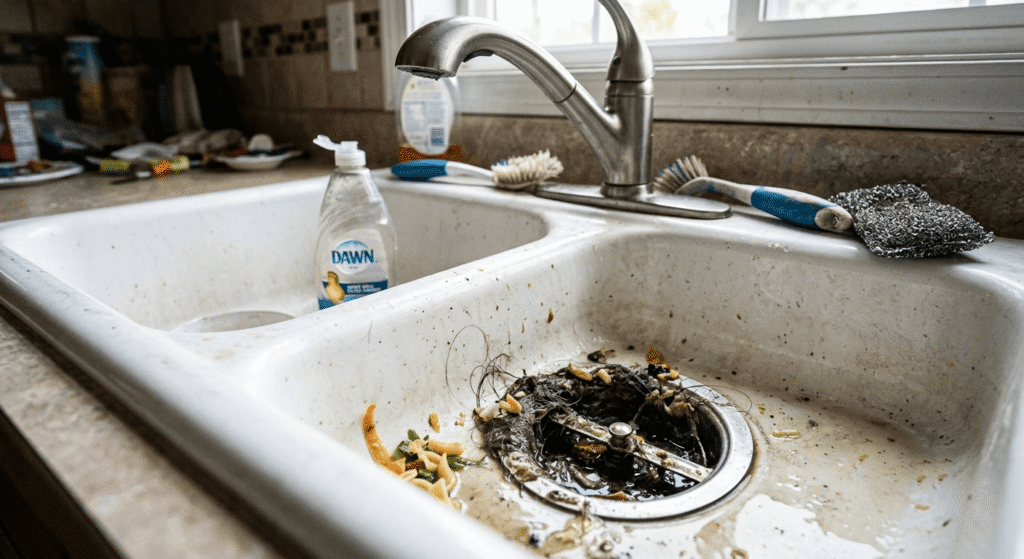
Drain cleaning removes blockages and buildup from interior plumbing lines so water and waste flow freely to the sewer or septic system. Every drain in a home or business connects to a pipe network that carries wastewater away from fixtures such as sinks, tubs, and floor drains. Over time, grease, hair, soap residue, food particles, and mineral deposits accumulate along the interior walls of these pipes, narrowing the passage and slowing drainage.
Property owners typically notice a drain problem through slow-draining water, gurgling sounds, recurring clogs, or unpleasant odors near a fixture. These symptoms indicate a partial or full obstruction somewhere in the line, ranging from a localized clog near the fixture trap to a deeper blockage in the main sewer line. The appropriate response depends on the location, cause, and severity of the obstruction.
Drain cleaning covers a range of techniques, from manual tools operated by a homeowner to specialized equipment used by licensed plumbers. Method selection depends on the clog type, the pipe material, and whether the blockage is a one-time event or a recurring issue tied to pipe condition. Chemical cleaners, mechanical snaking, and hydro jetting each address different degrees of blockage severity.
This article explains what drain cleaning involves, how each major method works, what professional services typically include, and how to select a qualified contractor. It also covers the differences between residential and commercial drain maintenance, common problems that professional cleaning resolves, and the factors that affect service pricing.
What Is Drain Cleaning?
Drain cleaning is the process of removing obstructions, residue, and buildup from the interior of plumbing pipes to restore normal water flow. It applies to individual fixture drains, such as those under a sink or in a shower, as well as to the main line that carries wastewater from a building to the municipal sewer or a private septic system.
The process addresses two categories of buildup: soft blockages, such as grease, soap scum, and hair, and hard obstructions, such as tree roots, mineral scale, or foreign objects lodged in the pipe. A drain cleaning method must match the obstruction type to clear the line effectively. Removing a soft clog near a sink trap requires different tools than clearing tree roots from a buried sewer line.
Drain cleaning differs from drain repair or pipe replacement. Cleaning restores flow within an existing pipe without altering its structure, while repair or replacement addresses physical damage such as cracks, corrosion, or collapsed sections. A pipe that clears normally after cleaning but clogs again within a short period may indicate a structural issue that cleaning alone cannot resolve.
Drain Cleaning vs. Drain Clearing (Understanding the Terms)
Drain cleaning and drain clearing both describe removing an obstruction from a pipe, and plumbing professionals often use the terms interchangeably. Some contractors distinguish between the two: drain clearing refers narrowly to eliminating an active clog and restoring flow, while drain cleaning includes clearing the clog and removing residual buildup from the pipe walls to reduce the likelihood of a repeat blockage.
Under this distinction, a plumber who runs a cable through a line to break up a single obstruction has performed drain clearing. A plumber who follows that step with hydro jetting to strip grease and scale from the pipe interior has performed a more complete drain cleaning. The terminology varies by company, so property owners benefit from asking a contractor to specify whether a quoted service addresses the immediate clog only or includes broader pipe maintenance.
How Does Drain Cleaning Work?
Drain cleaning works by applying mechanical force, chemical reaction, or pressurized water to break apart and remove material blocking a pipe. Each method dislodges the obstruction and carries it downstream or extracts it from the line, restoring the pipe’s original diameter and flow capacity.
The three primary methods are manual or mechanical snaking, chemical drain cleaners, and hydro jetting. Method selection depends on clog severity, pipe material, accessibility, and whether the blockage is isolated or distributed along the pipe interior. A licensed plumber assesses these factors, sometimes using a camera inspection, before selecting a method.
Mechanical/Manual Methods (Snaking)
Snaking clears a drain by feeding a flexible cable through the pipe to break apart or hook onto the obstruction. A manual drain snake, also called an auger, consists of a coiled metal cable with a specialized tip that a user rotates by hand or with a small motor.
The operator inserts the cable into the drain opening and advances it until it contacts the clog. Rotating the cable allows the tip to puncture, break apart, or hook the obstruction so the operator can pull it back through the opening or push it downstream. Motorized augers apply greater rotational force and reach longer distances than hand-cranked models, making them suitable for clogs several metres into a pipe. Snaking works effectively on hair, soft debris, and minor root intrusions but does not remove grease film or scale coating the pipe walls.
Chemical Drain Cleaners
Chemical drain cleaners work by using caustic, acidic, or oxidizing compounds to dissolve organic material blocking a pipe. Common formulations rely on sodium hydroxide, sulfuric acid, or bleach-based oxidizers, each of which reacts with grease, hair, and soap residue to break the material into smaller fragments that water can flush through the line.
These products generate heat during the chemical reaction, which further softens grease and accelerates the breakdown of the clog. Chemical cleaners work best on minor, localized clogs near the drain opening and are less effective against solid obstructions such as tree roots or foreign objects. Repeated use can corrode older metal pipes and harm septic system bacteria, so plumbers generally recommend chemical cleaners for occasional, minor blockages rather than routine maintenance.
Hydro Jetting
Hydro jetting clears a drain by forcing pressurized water through a specialized nozzle to scour the interior pipe walls and flush debris toward the sewer connection. A hydro jetting unit pumps water at pressures typically ranging from 1,500 to 4,000 pounds per square inch through a hose fitted with a rotating or multi-directional nozzle.
The nozzle directs water forward to cut through the clog and backward to clean the surrounding pipe walls as the hose advances through the line. This dual action removes grease buildup, mineral scale, and small root intrusions along the full length of the treated section, not just at the point of the original blockage. Hydro jetting requires professional equipment and pipe inspection beforehand, since excessive pressure can damage pipes already weakened by age or corrosion.
Drain Cleaning Methods and Which One Is Most Effective
The most effective drain cleaning method depends on the clog’s cause, location, and severity, with hydro jetting providing the most thorough result for pipes affected by grease buildup, scale, or minor root intrusion. Snaking resolves isolated, localized clogs quickly and at lower cost, while chemical cleaners suit minor, occasional blockages in accessible fixture drains.
A single, recent clog near a sink or shower trap typically responds well to snaking, since the obstruction sits close to the drain opening and consists of soft material such as hair or soap scum. A recurring clog in the same location, or a clog affecting multiple fixtures simultaneously, points to a broader buildup along the pipe interior or an obstruction in the main line, conditions that hydro jetting addresses more completely than snaking alone.
Chemical cleaners offer the least durable result among the three methods because they dissolve only the material in direct contact with the solution and leave residual buildup on the pipe walls. Plumbers commonly combine methods, using a camera inspection to identify the clog type, snaking or hydro jetting to clear it, and a follow-up camera pass to confirm the pipe is clear.
What’s Included in Professional Drain Cleaning Services
Professional drain cleaning services typically include an initial assessment, clog removal using mechanical or hydro jetting equipment, and a post-service inspection to confirm the line is clear. Many contractors also offer camera inspection, pipe condition reporting, and recommendations for follow-up maintenance as part of a standard service call.
A licensed plumber begins by identifying the fixture or line affected and determining whether the clog is isolated or connected to a larger blockage in the main sewer line. The plumber then selects a clearing method based on the assessment, performs the work, and tests the drain by running water through the fixture to confirm normal flow has returned.
Drain Cleaning Plumber vs. General Plumber
A drain cleaning plumber specializes in diagnosing and clearing pipe obstructions using equipment such as motorized augers, hydro jetting units, and inspection cameras, while a general plumber handles a broader range of plumbing installation and repair work. Some licensed plumbers perform both types of work, but companies that focus specifically on drain and sewer service typically maintain more specialized equipment and see a higher volume of clog-related cases.
A general plumber remains a suitable choice for routine drain cleaning tied to a single fixture. A recurring clog, a suspected main line blockage, or a clog linked to tree root intrusion benefits from a contractor with dedicated drain cleaning equipment and camera inspection capability, since these situations require diagnostic tools beyond a standard hand auger.
What a Typical Service Visit Involves
A typical drain cleaning service visit involves an initial consultation about the symptoms, a diagnostic step to locate the clog, the clearing procedure itself, and a final flow test. The plumber first asks about which fixtures are affected, how long the problem has persisted, and whether it has occurred before.
The plumber then locates the clog, either by testing accessible cleanout points or by running a camera through the line when the location is unclear. After clearing the obstruction with the selected method, the plumber runs water through the fixture or system to confirm the blockage has been fully removed. Many contractors document the visit with before-and-after camera footage when a camera inspection was performed, giving the property owner a record of the pipe’s condition.
Is Professional Drain Cleaning Worth It?
Professional drain cleaning is worth the cost for clogs that resist basic home remedies, affect multiple fixtures, or recur within a short period, since a licensed plumber can access the full length of a pipe and remove buildup that a plunger or store-bought cleaner cannot reach. A single, minor clog near a fixture trap often responds to a plunger or a manual auger, making professional service less necessary for that specific case.
A clog that returns after home treatment indicates buildup or an obstruction farther down the line, beyond the reach of typical consumer tools. Professional equipment, including motorized augers and hydro jetting units, reaches significantly farther into a pipe and applies more consistent force than manual tools. A camera inspection, available through most professional services, also identifies underlying issues such as pipe misalignment, root intrusion, or corrosion that a homeowner cannot diagnose without specialized equipment.
Drain Cleaning for Homes vs. Businesses
Drain cleaning needs differ between homes and businesses primarily in the volume and type of waste entering the plumbing system, the frequency of required maintenance, and the regulatory requirements that apply to commercial properties. Residential systems generally handle lower waste volume from household fixtures, while commercial systems often process higher volume and, in food service settings, greater grease content.
Businesses that generate wastewater with high grease or food particle content, such as restaurants, typically require more frequent drain maintenance than a residential property with comparable pipe age. Local regulations in many jurisdictions require commercial kitchens to install and maintain grease traps or interceptors, adding a compliance component to commercial drain maintenance that residential properties do not share.
Residential Drain Cleaning Needs
Residential drain cleaning needs center on individual fixture clogs caused by hair, soap residue, food scraps, and, in older homes, tree root intrusion into aging clay or cast iron sewer lines. Kitchen sinks, bathroom drains, and laundry connections account for most residential service calls, since these fixtures handle the materials most likely to cause buildup.
Homes with mature trees near the sewer line face a higher likelihood of root intrusion, since roots seek moisture and can enter a pipe through small cracks or joints. Older homes with original clay or cast iron piping also experience more scale buildup and corrosion-related blockages than homes with newer PVC piping, making periodic professional inspection a relevant consideration for property age.
Commercial Drain Cleaning Considerations
Commercial drain cleaning considerations include higher wastewater volume, grease management requirements, and the operational impact of a blocked drain on business activity. A restaurant, for example, generates substantially more grease-laden wastewater than a household, requiring grease trap maintenance in addition to standard drain cleaning to prevent blockages in both the trap and the connected piping.
A clogged drain in a commercial setting can halt food preparation, close a restroom, or disrupt customer service, giving business owners a strong incentive to schedule preventive cleaning rather than wait for a failure. Many commercial properties also operate under local health and plumbing codes that specify grease interceptor sizing and cleaning frequency, requirements that do not apply to residential properties.
Drain and Sewer Maintenance: Preventing Future Clogs
Drain and sewer maintenance prevents future clogs by removing the gradual buildup of grease, scale, and debris before it narrows a pipe enough to cause a blockage. Scheduled cleaning, careful disposal of grease and food waste, and periodic camera inspection of older sewer lines each reduce the likelihood of an unexpected clog.
Preventive maintenance differs from reactive drain cleaning in timing rather than method: the same techniques, including snaking and hydro jetting, apply in both cases, but preventive service occurs on a schedule rather than in response to a symptom. Property owners who address minor buildup on a routine basis typically avoid the more severe, harder-to-clear obstructions that develop when residue accumulates over years without attention.
Signs You Need Drain Maintenance
Signs that a property needs drain maintenance include slow-draining water, recurring minor clogs, gurgling sounds from fixtures, and unpleasant odors near drains even when no visible clog is present. These symptoms indicate that buildup is narrowing the pipe or that a partial obstruction is affecting normal airflow through the venting system.
Multiple fixtures draining slowly at the same time typically points to a blockage in the main line rather than an isolated fixture issue, since a single fixture clog does not usually affect other drains connected to the same branch. Water backing up into a lower-level drain, such as a floor drain or basement fixture, when using an upper-level fixture also signals a main line obstruction that warrants professional attention.
How Often Should Drains Be Professionally Cleaned
Most residential properties benefit from professional drain cleaning or inspection every one to two years, while commercial kitchens with grease traps often require cleaning on a monthly or quarterly schedule depending on local regulations and waste volume. These intervals serve as general guidance; actual frequency depends on pipe age, tree root exposure, and household or business waste patterns.
A property with a documented history of tree root intrusion or frequent clogs may need more frequent professional attention than these general intervals suggest. A newer home with PVC piping and no history of blockages may extend the interval beyond two years without increased risk. A plumber’s camera inspection provides a more precise recommendation based on the pipe’s actual condition rather than age alone.
Common Drain Problems Solved by Professional Cleaning
Professional drain cleaning resolves grease and soap buildup, hair clogs, tree root intrusion, mineral scale accumulation, and blockages caused by foreign objects lodged in a pipe. Each of these problems narrows or fully obstructs the pipe interior, and professional equipment removes the specific material or obstruction responsible.
Grease and soap buildup accumulates gradually along pipe walls, particularly in kitchen lines, and hydro jetting removes this coating more completely than snaking or chemical treatment. Hair clogs typically form near bathroom fixture traps and respond well to snaking. Tree root intrusion occurs when roots enter a pipe through small cracks or joints in older sewer lines, and a plumber addresses this by cutting the roots mechanically or with hydro jetting, followed by an evaluation of whether pipe repair is needed to prevent recurrence. Mineral scale, common in areas with hard water, narrows pipe diameter over time and responds to hydro jetting’s scouring action. Foreign objects, such as toys or sanitary products lodged in a line, often require mechanical retrieval with a specialized auger attachment.
How to Choose a Drain Cleaning Contractor
Choosing a drain cleaning contractor involves verifying the company’s license and insurance, confirming experience with the specific type of clog or pipe material involved, and comparing service inclusions such as camera inspection and warranty terms. A licensed plumber carries the training and liability coverage required to work on residential or commercial plumbing systems safely.
Property owners benefit from asking a prospective contractor whether the quoted price includes a camera inspection, what equipment the company uses for different clog types, and whether the service includes a guarantee if the clog returns within a specified period. A contractor with hydro jetting equipment, in addition to standard augers, offers a wider range of solutions for buildup-related and recurring clogs. Checking recent customer reviews and confirming the company’s experience with the property’s specific pipe material, such as older clay or cast iron lines, further supports an informed choice.
Drain Cleaning Costs: What Affects the Price
Drain cleaning costs vary based on the clearing method used, the clog’s location and severity, whether a camera inspection is included, and regional labor rates. Basic snaking of a single, accessible fixture drain typically costs less than hydro jetting a full main sewer line, since hydro jetting requires specialized equipment and more service time.
Clog location affects price directly: a clog accessible through a nearby cleanout costs less to clear than one requiring the plumber to access a line through a roof vent or buried section of pipe. Severity also plays a role, since a straightforward, isolated clog requires less time than a distributed buildup requiring hydro jetting across an extended pipe run. Camera inspection, when added as a separate service, increases the total cost but provides diagnostic information that can prevent repeat service calls. Regional labor rates and whether the work occurs during standard business hours or as an emergency call further influence the final price, with emergency and after-hours service typically carrying a higher rate than scheduled daytime appointments.