
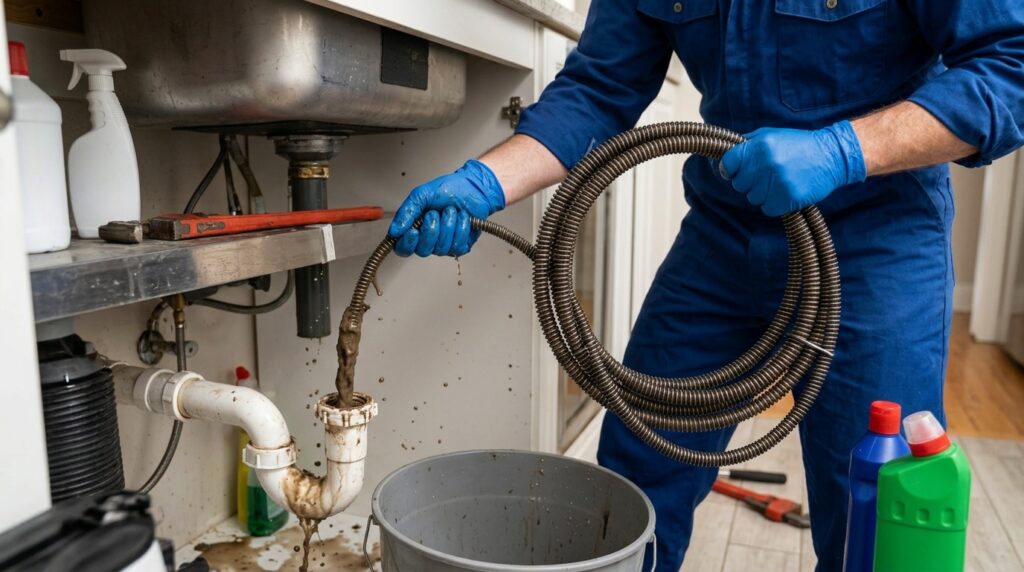
Hydro jetting a drain costs $150 to $1,000 for most U.S. homes, and a typical residential job runs $250 to $600. Hydro jetting is a drain-cleaning method that sends water through a hose and nozzle at 3,000 to 4,000 PSI to scour grease, scale, sludge, soap residue, and roots from the inside of a pipe. The final price depends on which drain is cleaned, how severe the clog is, and the condition of the pipe.
The price range is wide because hydro jetting is not a fixed-scope service. A single kitchen sink drain, a main drain line, and a restaurant grease line require different equipment, labor time, and access work. Contractors also price the service differently, using flat rates, hourly rates, or a base fee plus add-ons.
Cost also extends beyond the jetting itself. A camera inspection, root cutting, or repairs to a damaged pipe can raise the final bill above the base quote. Older drains carry added risk, because high-pressure water can expose weaknesses that were already present in cast iron, clay, or deteriorated lines.
This guide explains the average price range for drains, the cost by job type and property, the factors that move a quote, the extra charges that can appear, the cost comparison with snaking, and the value of the service over time. It also covers the risks for older pipes and the steps for getting a fair quote. All figures are typical U.S. market ranges in U.S. dollars and vary by contractor and region.
How Much Does It Cost to Hydro Jet a Drain?
Hydro jetting a drain typically costs $150 to $1,000, and a standard residential job averages roughly $250 to $600. The price covers the technician’s time, the use of a jetting unit, and the water and fuel the machine consumes.
Prices fall at the low end for a single fixture drain with light buildup and easy access. Prices climb above $1,000 for long main drain lines, severe blockages, difficult access, or emergency calls. Most contractors set a minimum service charge, so even a quick job rarely falls below $150.
Average Price Range for a Residential Drain
The average price range for hydro jetting a residential drain is $250 to $600, with single-fixture drains near $150 to $400 and main drain lines near $350 to $1,000. Homeowners with an accessible drain and a moderate clog usually pay in the lower half of the applicable range.
The range reflects a normal job: one drain line, one accessible cleanout or fixture opening, and no pipe damage. A drain that needs more than one pass, or a clog that resists the first attempt, extends technician time and pushes the invoice toward the upper end. Charges for camera work, root cutting, and repairs are separate from this range and appear in later sections.
Why Quotes Vary So Widely (one short paragraph; leads to the factors section)
Quotes vary widely because each contractor prices the same job using different assumptions about clog severity, pipe length, access, local labor rates, urgency, and pricing model. Two quotes for the same drain can differ by several hundred dollars when one includes a camera inspection and the other does not. Each of these variables has a measurable effect on price, and the factors section below explains how each one changes the final number.
Hydro Jetting Cost by Job Type and Property
Hydro jetting cost depends first on what is being cleaned: a main drain line, a single branch or fixture drain, a full set of household drains, or a commercial line. Typical prices run from $150 for a single fixture drain to $2,500 or more for large commercial and grease-line jobs. Each job type differs in pipe diameter, length, volume of debris, and the equipment required.
Residential Main Drain Line
A residential main drain line costs $350 to $1,000 to hydro jet, depending on length, diameter, and clog severity. The main drain line is the largest drain in the house. It carries all wastewater from the home to the municipal sewer or septic tank, usually through a 4-inch pipe.
Jetting a main drain line requires access through a cleanout, often located in a basement, crawl space, or exterior yard. Lines longer than 100 feet, lines with sags or offsets, and lines packed with roots or hardened grease require more time and sometimes multiple passes. Those conditions move the price toward or above $1,000.
Branch, Kitchen Sink and Single-Drain Jetting
Jetting a branch line, kitchen sink drain, or single drain costs $150 to $400. These drains use smaller pipes, typically 1.5 to 3 inches in diameter, and shorter runs than a main drain line, so the job takes less time and uses a smaller nozzle.
Kitchen sink drains sit at the upper end of this range because cooking grease solidifies inside the pipe and forms dense buildup. A bathroom or laundry drain with light soap and hair buildup falls near the lower end. When a technician is already on site to jet the main drain line, a branch drain is often added at a reduced incremental cost.
Whole-House Drain Systems
Jetting a whole-house drain system costs roughly $500 to $1,500, depending on the number of drains, the pipe layout, and the age of the plumbing. This job cleans the main drain line and each connected branch, including kitchen, bath, laundry, and floor drains.
A larger home with several bathrooms and a multi-level layout requires more access points and more setup time. Homes with older cast iron or clay branch lines can require additional passes to remove scale. The total is usually lower than pricing each drain as a separate service call.
Commercial and Grease-Line Jetting
Commercial and grease-line jetting costs $500 to $2,500 or more per visit. Restaurants, apartment buildings, and food-processing sites generate heavy fat, oil, and grease (FOG) loads, and their drain lines are larger and longer than residential lines.
Commercial work often uses higher-output equipment and may require after-hours scheduling to avoid disrupting business. Many food-service properties arrange recurring service contracts, such as monthly or quarterly jetting, which are priced per visit below the one-time emergency rate. Commercial invoices may also include grease-trap servicing and waste disposal as separate line items.
What Affects the Cost of Hydro Jetting a Drain
Five factors determine the cost of hydro jetting a drain: clog severity and type; line length, diameter, and access; location and local labor rates; emergency timing; and the contractor’s pricing model. Each factor changes the labor hours, equipment demand, or fee structure behind the quote.
A heavily blocked, long, hard-to-reach drain in a high-cost metro area, serviced on an emergency basis, costs several times more than a short, lightly clogged drain serviced on a weekday appointment. Understanding which factors apply to a specific property allows a homeowner to judge whether a quote is reasonable.
Clog Severity and Type (grease, scale, roots)
Clog severity and type affect cost because hardened blockages take longer and require more passes than soft buildup. Grease, mineral scale, and tree roots are the three main clog types, and each demands different nozzle selection and technique.
Grease and soap buildup usually clears in one or two passes. Mineral scale, common in older cast iron pipe, requires slower, repeated passes with an aggressive nozzle. Tree roots require a root-cutting or rotating nozzle and often more time, particularly when roots have formed a dense mass at a joint. Severe clogs can move a job from the $250 to $600 range to $800 or more.
Line Length, Diameter and Access
Line length, diameter, and access affect cost by determining how much hose, time, and setup the job requires. Longer drain lines need more hose and more passes, and larger-diameter lines require higher flow to flush debris out.
A drain with an existing, easily reached cleanout needs minimal setup. A drain without an accessible cleanout can require the technician to pull a toilet or access the line through a roof vent, which adds labor time. Some contractors install a new cleanout before jetting, and that installation is billed separately.
Location and Local Labor Rates
Location and local labor rates affect cost because plumber hourly rates differ by region, typically running from about $100 to $250 per hour. Metropolitan areas with high living costs and strong demand, such as coastal cities, sit at the top of that range.
Local conditions also shape price. Regions with large tree canopies and clay soil see more root intrusion, which increases job difficulty. Local permit rules, disposal fees, and travel distance from the contractor’s shop add smaller amounts to the invoice.
Emergency and After-Hours Service
Emergency and after-hours service raises the cost of hydro jetting, with surcharges commonly ranging from 1.5 to 2 times the standard labor rate. Nights, weekends, and holidays carry the highest premiums, because contractors pay overtime and reserve capacity for urgent calls.
A fully blocked drain or an active sewage backup is the most common reason for an emergency call. Scheduling a planned appointment during regular weekday hours avoids the surcharge. Homeowners who notice slow drains, gurgling sounds, or recurring odors can book service before the drain fails completely.
Flat-Rate vs. Hourly Pricing
Flat-rate pricing sets a single price for a defined job, while hourly pricing bills for the technician’s time plus equipment fees. Flat-rate quotes offer cost certainty, and hourly quotes can cost less on a quick job or more on a complicated one.
A flat-rate quote protects the homeowner from overruns, but it often includes a margin for uncertainty. An hourly quote reflects actual time, which benefits simple jobs and exposes the homeowner to higher cost when the blockage is stubborn. Some contractors combine a base service fee with an hourly rate after a set number of hours. The pricing model should be stated in writing before work begins.
Extra Costs That Can Add to the Hydro Jetting Bill
Three extra costs most often add to a hydro jetting bill: camera inspection, tree root removal, and sewage backup cleanup and repairs. These services are separate from the jetting charge and can increase the final invoice by $100 to several thousand dollars, depending on what the drain contains.
Extras are not always necessary, but they relate to the condition of the drain. A camera inspection shows the cause of a clog, root removal addresses an ongoing source of blockage, and cleanup or repair applies when the drain has already failed or sustained damage.
Camera Inspection
A drain camera inspection typically costs $100 to $500 as a separate service. The inspection sends a waterproof camera through the drain to show blockages, root intrusion, cracks, bellies, and pipe material.
Many contractors discount or bundle the inspection when it is booked with jetting. An inspection before jetting identifies damaged or fragile pipe that high pressure could worsen. An inspection after jetting confirms that the drain is clear and records its condition. The recording also gives a homeowner documentation for insurance claims, home purchases, or later repairs.
Tree Root Removal
Tree root removal adds roughly $200 to $800 or more when roots are dense or require mechanical cutting beyond standard jetting. A jetting nozzle with a cutting or rotating head clears fine roots, while thick roots may need a mechanical cutter or auger first.
Root removal clears the pipe but does not eliminate the source. Roots enter through joints and cracks and regrow, usually within one to two years if the pipe defect remains. Repeated root clearing costs less than excavation in the short term, while a permanent solution involves repairing or lining the damaged pipe section.
Sewage Backup Cleanup and Repairs
Sewage backup cleanup and repairs add from several hundred dollars to several thousand dollars, depending on the amount of water damage and the pipe defect found. Cleanup includes extraction of wastewater, disinfection, and drying of affected floors and walls.
Repair costs depend on the repair method. A spot repair of a single damaged section costs less than trenchless lining or a full line replacement, and a full replacement can reach five figures. Homeowners’ insurance policies usually exclude sewer backup damage unless a sewer backup endorsement is attached, so coverage should be confirmed before filing a claim.
Hydro Jetting vs. Snaking: Cost and Value
Hydro jetting costs more than snaking, at $150 to $1,000 compared with roughly $100 to $350 for a drain snake, but hydro jetting removes more buildup and delivers longer-lasting results. Snaking, also called auguring, uses a rotating metal cable to punch through or hook a clog, while hydro jetting uses pressurized water to scour the full inner surface of the pipe.
A snake clears a path through a blockage and leaves a layer of grease, scale, and debris on the pipe wall. That residue builds up again, and the clog often returns within months. Hydro jetting removes that coating, which restores the drain’s flow capacity and usually extends the time before the next blockage.
Snaking provides better value for a simple, recent clog, such as a toothbrush or a hair mass near a fixture. Hydro jetting provides better value for recurring clogs, grease and scale buildup, and root intrusion. Hydro jetting also requires more caution on fragile or damaged pipes, where a snake is the lower-risk option.
Is Hydro Jetting Worth the Price?
Hydro jetting is worth the price when a drain has recurring clogs, heavy grease or scale buildup, or root intrusion, because it clears the full pipe wall rather than only the blockage. For a one-time, simple clog, a lower-cost snake service is usually enough.
The value of the service depends on the drain’s condition and clog history. A homeowner who pays for repeated emergency visits and snake services over a year can spend as much as one hydro jetting job and still have a dirty pipe. A pipe in poor structural condition, however, may not benefit from high pressure, and the older pipe risks section explains that limit.
When Hydro Jetting Pays Off
Hydro jetting pays off in four situations: recurring clogs, grease-heavy drains, root intrusion, and preparation before a pipe repair or lining. In each case, the service removes buildup that cheaper methods leave behind.
Recurring clogs indicate coating on the pipe wall that a snake does not remove. Kitchen drains and commercial food-service lines gather hardened fat that jetting dissolves and flushes away. Root-prone lines benefit from a root-cutting nozzle that clears the full circumference of the pipe. Pipe lining and spot repairs require a clean interior, so contractors jet the drain before installation.
How Long the Results Last and How Often to Repeat It
Hydro jetting results typically last one to two years in a residential drain, and the service is commonly repeated every 12 to 24 months as preventive maintenance. The interval changes with the cause of the buildup and the condition of the pipe.
Drains with active root intrusion often need jetting every 12 months or sooner. Residential drains with normal use and no recurring problems can go longer between services. Restaurants and other commercial sites with heavy grease loads often schedule jetting monthly or quarterly. A camera inspection after each service helps determine whether the interval should be shortened or extended.
When Hydro Jetting Can Cost More Than Expected: Risks for Older Pipes
Hydro jetting can cost more than expected on older pipes because high-pressure water can worsen existing cracks, breaks, and corroded sections, and the damage then requires repair on top of the cleaning fee. Pipes made of cast iron, clay, Orangeburg (bonded fiber), and aged or deteriorated PVC joints carry the highest risk.
Cast iron pipe develops scale and corrosion that thin the pipe wall over decades. Clay pipe has joints that allow root entry and can crack under pressure. Orangeburg pipe, used in some homes built from the 1940s through the 1970s, softens and deforms with age and is not suited to high-pressure jetting. Pressure can dislodge weakened sections and cause collapse or leaks that were hidden before.
A camera inspection before jetting lowers this risk by showing the pipe material and condition, and it lets the contractor adjust the pressure or recommend a gentler method. The inspection fee is small compared with the cost of repairing a pipe damaged during cleaning. Homeowners with drains older than about 50 years or with a history of collapses should request an inspection before authorizing the work.
How to Get a Fair Quote for Hydro Jetting
A fair quote for hydro jetting comes from comparing at least three written estimates from licensed plumbers using the same job details. The estimates should state the scope, the price, the pricing model, and any conditions that could change the final total.
Providing each contractor with the same information makes the quotes comparable. That information includes the drain location, approximate length, clog history, pipe material if known, and whether a cleanout exists. A quote given without an assessment is an estimate, and the final price can change once the technician sees the drain.
What a Complete Quote Should Include
A complete hydro jetting quote includes six items: the scope of work, the total price or hourly rate, the camera inspection terms, the equipment and pressure used, the extra-charge conditions, and the warranty. Each item prevents a different source of surprise on the final invoice.
The scope of work states which drains will be jetted and whether the price covers one pass or as many as needed. The quote should state whether the camera inspection is included or billed separately, and whether cleanout installation is covered. Extra-charge conditions, such as root cutting or after-hours fees, should be listed with their prices. The contractor’s license number and proof of insurance belong on the document as well.
Questions to Ask Before Booking (warranty, camera inspection, pricing model)
Three questions determine most of the value in a hydro jetting quote: what warranty covers the work, whether a camera inspection is included, and whether the price is flat-rate or hourly. The answers show what the homeowner receives for the price.
On warranty, ask how long the work is guaranteed and whether the contractor returns at no charge if the clog recurs within that period. On camera inspection, ask whether the contractor inspects before jetting, after jetting, or both, and whether the footage is provided. On pricing model, ask for the flat rate or the hourly rate, the minimum charge, and the conditions that trigger additional fees. Ask also what pressure the contractor uses on the pipe material in the home.
Can You Do It Yourself?
A homeowner can attempt do-it-yourself drain jetting with a pressure-washer drain hose, but the equipment does not match professional output and is not recommended for a main drain line. Consumer pressure washers typically produce 1,500 to 3,000 PSI, and the attachments suit short, small-diameter drains, such as a sink or tub line.
Professional jetting units deliver higher pressure and flow through longer hoses with specialized nozzles, and technicians use a camera to confirm the pipe condition. A homeowner without a camera cannot see cracks or weak sections, and misuse of pressure can damage the pipe or force wastewater back into the home. A main drain line with recurring clogs, roots, or older pipe material requires professional equipment and a licensed plumber.