
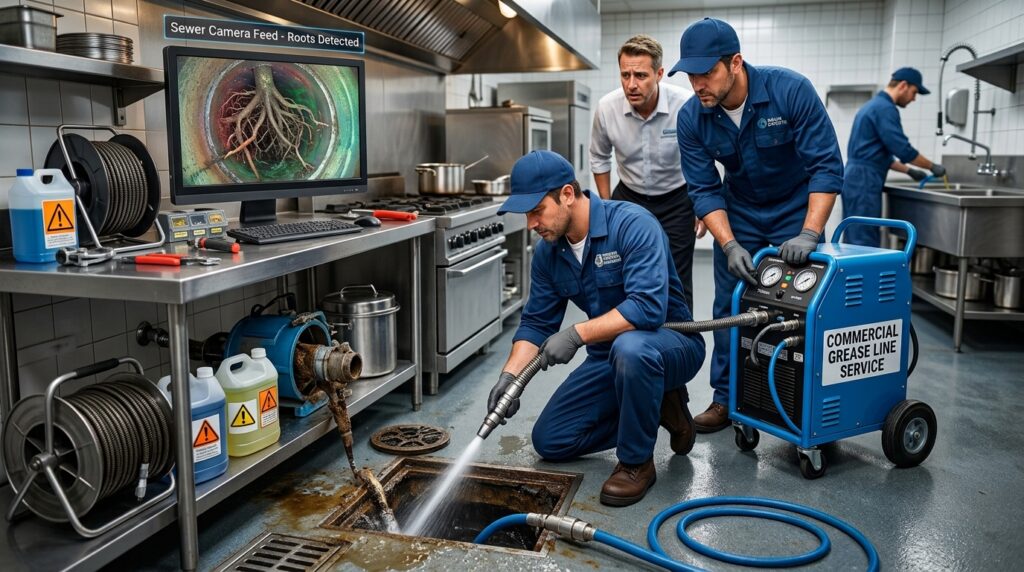
Professional drain cleaning in the United States costs between $147 and $352, with an average of about $246. Other pricing guides report wider ranges of $100 to $500 for typical residential clogs, and main sewer line work reaches $800 or more. The final invoice depends on where the clog sits, how severe it is, and which method clears it.
A “drain cleaning” invoice can cover a short snaking visit at a bathroom sink or a two-hour sewer main job with a camera inspection. The two jobs use different equipment, take different amounts of time, and carry different prices. Reading a quote correctly means knowing which service it describes.
This guide covers the price of a standard visit, the cost by drain location and cleaning method, the factors that raise a quote, and the point where a cleaning becomes a repair. It also compares do-it-yourself and professional work, and explains how to check a quote for fairness.
All prices are in U.S. dollars and reflect 2026 national figures from home-service cost guides and plumbing contractors.
How Much Does Professional Drain Cleaning Cost?
Professional drain cleaning costs about $246 on average in the United States, and most jobs fall between $147 and $352. Fixture clogs in sinks, tubs, and toilets sit below that average, and main sewer line work sits above it.
Cost guides report different ranges because they sample different jobs. One 2026 guide puts a typical residential clog at $100 to $500, with a national average near $242. Another gives $150 to $450 per drain. The differences come from different job samples, not from a disagreement about the market.
The lowest prices apply to simple clogs that sit close to the fixture and need little time. Prices exceed $500 when the blockage lies deep in the main line, requires hydro jetting or a camera inspection, or is billed at emergency rates. Each of these cost drivers is covered in the sections below.
Drain Cleaning Cost by Drain Location
Drain cleaning cost changes by drain location because each location differs in access, pipe size, and equipment needs. Fixture drains cost less than the main line.
The following table compares typical professional prices for common drain locations. Read each row as the usual cost of clearing one drain, before repairs or camera work.
| Drain location | Typical cost |
| Kitchen sink | $110 to $215 |
| Toilet | $110 to $275 |
| Bathtub or shower | About $225 |
| Floor or laundry drain | $150 to $300 |
| Basement floor drain | $150 to $400 |
| Main sewer line | $100 to $800 |
Fixtures close to the visible drain opening need short cable runs and little time. The main line carries wastewater from the whole house, so a blockage there affects every fixture and requires longer reach and heavier equipment. Basement floor drains often connect to the main line, which explains their higher upper limit.
Toilet Drain Clearing Cost
Clearing a toilet drain costs $100 to $275 on average. The price covers a plumber’s visit and either a toilet auger for a clog in the fixture or a full snake for a clog deeper in the drain.
A plunger-resistant clog needs a toilet auger or a full snake, and that choice sets the price within the range. A clog in the toilet trap is the cheapest case. A blockage that sits past the trap, in the branch line, takes longer and costs more. If several fixtures back up at once, the cause is probably the main line, and the job is priced as a sewer line service instead.
Main Sewer Line Cleaning Cost
Main sewer line cleaning costs $200 to $500 with a snake and $600 to $1,400 with hydro jetting. Sewer line work is the most expensive drain service because of the pipe length, the equipment, and the access involved.
Other sources report lower jetting prices, such as $350 to $600 for sewer cleanout jetting. The gap reflects regional pricing and job severity. One national average for clearing a main sewer line is $380, with a range from $99 for a small snaked clog to $1,600 for a video inspection plus hydro jetting of a major blockage.
A camera inspection is a separate line item. A stand-alone sewer camera inspection costs $125 to $500. Plumbers recommend one when the clog location is unknown or the blockage returns.
Drain Cleaning Cost by Method
Drain cleaning cost by method runs from about $100 for snaking to $350 or more for hydro jetting. The method sets the equipment, the time on site, and how long the result lasts.
The following table compares the main cleaning methods by typical price and best use. Prices describe residential work and exclude repairs.
| Method | Typical cost | Best use |
| Hand snake | $75 to $200 | Single-fixture clogs near the drain opening |
| Motorized snake | $150 to $400 | Branch lines and main lines up to 50 to 100+ feet |
| Hydro jetting | $350 to $1,600 | Grease, scale, roots, and recurring clogs |
| Camera inspection (separate) | $125 to $500 | Locating or confirming the cause of a clog |
Snaking removes or breaks apart one clog. Hydro jetting scours the pipe wall, so it costs more and also removes the residue that causes repeat blockages.
Snaking and Augering
Snaking and augering cost $100 to $250 for a standard clog. A plumber feeds a flexible cable or auger into the drain, then breaks up or pulls out the blockage.
Hand-cranked snakes serve single fixtures, while motorized augers reach farther. A power auger reaches 50 to 100 feet or more, which suits branch and main lines and explains the higher motorized price.
Snaking works best on hair, soap scum, small debris, and shallow blockages near the fixture. It opens a channel through the clog but may leave grease or scale on the pipe wall, so the same drain can slow down again within months.
Hydro Jetting
Hydro jetting costs $350 to $600 for a typical residential job and up to $1,400 or more for severe sewer line blockages. A jetting nozzle sprays high-pressure water inside the pipe to scour grease, scale, sludge, and roots from the pipe wall.
The water runs at 3,000 to 4,000 PSI. Another guide puts most homes at $300 to $800 and severe cases at $800 to $1,200 or more.
Access affects the price. Jetting assumes the plumber can reach a cleanout, and cutting a pipe to install one adds an estimated $800 to $1,500. The higher upfront price offsets repeat service calls on recurring clogs, because jetting can keep a line clear for two to three years.
Which Method Your Clog Actually Needs
Snaking suits an isolated clog at a single fixture, and hydro jetting suits recurring clogs, grease-heavy lines, and main sewer line maintenance. The clog’s location and cause decide which method is cost-effective.
Choose snaking when one fixture drains slowly and the others run normally. Hair, soap, or a small object near the drain opening is the usual cause. Choose hydro jetting when the same drain clogs repeatedly, when a kitchen line carries grease, or when several fixtures back up together.
A camera inspection is the best way to confirm the cause when the method is unclear. A plumber who recommends jetting without any diagnosis gives the homeowner less to evaluate, so ask what the camera or the snake found.
What Makes One Drain Cleaning Quote Higher Than Another
One drain cleaning quote is higher than another because of five main factors: the clog’s location, its severity, the cleaning method, the pricing structure, and the time of the call. Clogs far from a cleanout, tree roots, and after-hours service add the most cost.
The location and method factors appear in the earlier sections. Severe main line clogs can exceed $1,000 depending on the cause, the distance from an accessible cleanout, and whether the pipe runs beneath an occupied space. Regional labor rates and the need for a camera inspection add to the base price. The two factors below control most of the difference between two quotes for the same clog.
Flat-Rate vs. Hourly Pricing and Service-Call Fees
Flat-rate pricing fixes the price of the job before work starts, while hourly pricing bills for the time spent and can rise if the clog takes longer than expected. A service-call fee is added in either structure.
The following table compares the three charges that appear on most drain cleaning quotes.
| Charge | Typical amount | What it covers |
| Flat rate | Fixed before work starts | A defined job, such as single-fixture snaking |
| Hourly labor | $85 to $175 per hour | Time on site for undefined or longer jobs |
| Service or trip fee | $100 to $250 | Travel plus the first diagnostic hour |
Many plumbers offer a fixed price for snaking instead of hourly billing, which can creep higher. Most companies charge the service-call fee before work begins, and it is typically non-refundable.
Hourly billing suits an unknown problem, and flat-rate billing suits a defined job. Ask whether the quoted price includes the service-call fee.
Emergency and After-Hours Surcharges
Emergency and after-hours calls add 50% to 100% to the standard price. Nights, weekends, and holidays carry the highest premiums.
A $200 snaking job becomes $300 to $400 on a Sunday night under a 50% to 100% surcharge. Pricing structures vary, as the table below shows.
| Surcharge structure | Typical amount |
| Percentage added to the job | 50% to 100% |
| Flat after-hours fee | $75 to $200 |
| Weekday evening hourly rate (after 5 PM) | 1.25 to 1.5 times standard |
| Overnight hourly rate | 1.5 to 2 times standard |
The clearing work is the same job as a scheduled visit, so the surcharge pays for availability, not extra labor. A clog that is not causing flooding or a sewage backup can wait for business hours and avoid the premium.
When a Drain Cleaning Turns Into a Repair Bill
A drain cleaning becomes a repair bill when the plumber finds damaged, collapsed, or root-invaded pipe, or when the line has no accessible cleanout. Repairs cost several times more than the cleaning itself.
A camera inspection usually reveals the problem. Root intrusion is the most common escalation, and damaged pipe adds separate repair costs. The following table lists the typical price of each escalation.
| Escalation | Typical cost |
| Tree root removal | $100 to $1,000 |
| Cleanout installation | $500 to $2,000 |
| Spot repair of a cracked pipe | $600 to $1,050 |
| Sewer line repair (average about $2,600) | $1,100 to $4,100 |
| Full sewer line replacement | $1,388 to $5,323 |
Missing access adds cost as well, because a cleanout makes later clearing easier. Ask the plumber for the camera findings and a separate, written estimate for any repair before authorizing work beyond the cleaning.
DIY vs. Professional Drain Cleaning: Cost and Trade-Offs
DIY drain cleaning costs less than professional service for minor clogs, but it cannot reliably clear deep or main-line blockages. Clearing a minor clog yourself saves over $100 on average. A plunger, a hand snake, or an enzymatic cleaner can resolve a clog near a single fixture.
Professional service costs more but brings equipment and diagnosis that a homeowner lacks. The following table compares the two approaches by cost, reach, and risk.
| Criterion | DIY | Professional |
| Cost | Saves $100+ on minor clogs | $147 to $352 for most jobs |
| Reach | Near the fixture | Branch lines and main sewer line |
| Diagnosis | Limited; a camera rental costs $120 to $225 per day | Camera inspection, $125 to $500 |
| Equipment | Plunger, hand snake, enzymatic cleaner | Motorized augers and hydro jetters |
| Main risk | A failed attempt adds the professional bill on top | Higher upfront price |
Three conditions favor a professional: several fixtures back up together, the same drain clogs repeatedly after DIY attempts, or sewage appears in a floor drain or shower. A plumber’s inspection also finds hidden problems, such as main-line clogs or septic issues.
How to Get a Fair Quote and Avoid Overpaying
A fair drain cleaning quote is a written, itemized price that names the method, the drain, and every fee. Obtaining that quote takes five steps:
- Request the price in writing before work starts.
- Ask whether the service-call fee is included in the quoted price.
- Ask for a flat rate when the job is a defined snaking.
- Request a camera inspection before any jetting or main-line recommendation.
- Compare at least two quotes for jetting, main-line, or repair work.
The second-opinion step carries the most savings on expensive jobs. Competing bids on jetting and main-line quotes reveal the proportionate fix, not the most profitable one. Scheduling during business hours removes the emergency premium.
Prevention lowers future cost. Mesh drain screens and keeping grease out of the sink prevent most fixture clogs. Compare quotes only when they describe the same drain, method, and scope of work.
Drain Cleaning Prices in Your Area
Drain cleaning prices in your area depend on local labor rates, cost of living, and plumber demand, so they can sit above or below the national $246 average. The national figures in this guide give a baseline for judging a local quote.
The following table lists published regional examples. Each row comes from a different source and method, so use the rows as indicators of variation, not as a ranking.
| Area | Reported price |
| United States, national average | About $246 |
| Midwest | 10% to 15% below the national average |
| Austin, Texas | $125 to $350 (average $200) |
| Indianapolis, Indiana | Cable cleaning from $300; jetting around $700 |
Contractor prices vary within a region as well, since each company sets its own base rates and fees.
To check a local price, gather two or three written quotes for the same drain and method, and compare them with the ranges in the location and method sections above. A quote far above the range for its job type warrants a question about the cause, the method, or the fees included.