
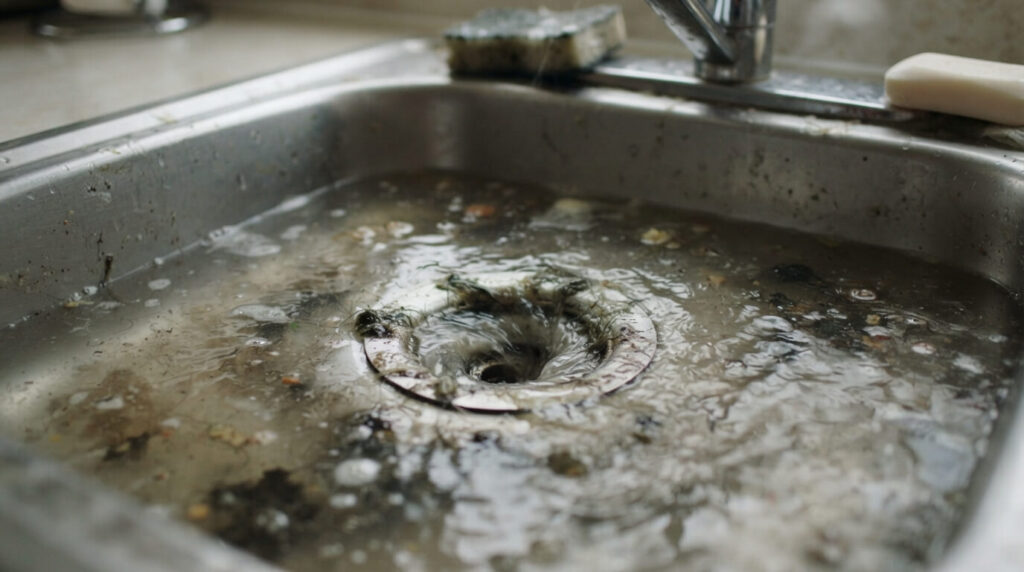
A sink drains slowly when something narrows or obstructs the drain line, or when air cannot enter the pipe behind the water. The most common cause is partial buildup of hair, soap scum, grease, or food waste in the drain pipe or P-trap. Each of these restricts the flow before it stops completely.
The cause depends on the sink type, the location of the restriction, and the number of fixtures affected. A kitchen sink slows mainly from grease and food residue. A bathroom sink slows mainly from hair and soap scum. A slow drain across several fixtures points to the main drain line or the vent system instead of a single sink trap.
Correct treatment follows correct diagnosis. A stopper blocked with hair needs manual removal, a partial pipe restriction needs a plunger or drain snake, and a vent or main-line fault needs professional repair. Treating the wrong cause wastes time and can damage pipes.
This guide explains how a sink drain works, how to identify the cause, and how to fix it from the simplest method to the most involved. It also compares cleaning methods, separates kitchen from bathroom fixes, covers slow drains without a clog, and identifies when to call a plumber.
What Makes a Sink Drain Slowly
A sink drains slowly when the drain line’s flow capacity drops below the rate at which water enters it. Partial blockages, pipe-wall buildup, a blocked vent, or insufficient pipe slope cause this reduction. The restriction is usually gradual, so drain speed declines over weeks or months before the sink backs up.
Most restrictions form in the first few feet of the drain, between the strainer and the P-trap. Waste deposits collect there because the pipe narrows, changes direction, and holds standing water. Fixtures further along the line fail less often, but a restriction there affects every fixture connected to it.
How a Sink Drain and P-Trap Work
A sink drain carries wastewater from the basin through the strainer, tailpiece, and P-trap into the branch drain line. The P-trap is a curved pipe section that holds water to block sewer gas from entering the room. Its bend also collects debris.
Gravity moves wastewater through the drain. The plumbing vent, a pipe that extends from the drain system to the roof, admits air behind the flowing water so the water moves without creating suction. Without that air, water drains slowly and the trap can gurgle.
The trap’s bend is the narrowest and most directional point in the fixture drain. Hair, grease, and solids settle in it, which makes the P-trap the most frequent site of partial blockages. Kitchen sinks typically use a 1½-inch drain, and bathroom sinks typically use a 1¼-inch drain, so bathroom drains have less capacity and restrict sooner.
Slow Drain vs. Fully Blocked Drain
A slow drain still carries water away at a reduced rate, while a fully blocked drain holds standing water that does not recede. The difference shows the degree of restriction: a slow drain has a partial obstruction, and a full blockage has a complete one.
A slow drain gives the reader time and options. Water level in the basin falls gradually, and the restriction is often close to the surface, in the stopper, strainer, or trap. A full blockage suggests a denser obstruction, a blocked line further down, or a foreign object in the pipe.
Drain behavior can change between the two states. A partial restriction collects more debris over time and becomes a full blockage, so a slow drain is an early warning and treating it early avoids a complete backup.
Why Your Sink Is Draining Slowly, by Sink Type
The cause of a slow drain differs by sink type because each sink receives different waste. Kitchen sinks receive grease, oils, and food particles. Bathroom sinks receive hair, soap, toothpaste, and personal-care products. Rarely used sinks develop slow drainage for separate reasons, such as dried trap water and mineral deposits.
Identifying the sink type narrows the likely cause before any tool is used. The following sections give the typical causes for each situation.
Common Causes in Kitchen Sinks
Kitchen sinks drain slowly mainly because of grease buildup, food particles, and garbage disposal residue. Cooking fats cool and solidify on pipe walls, and food solids catch in the coating, narrowing the pipe until flow drops.
Grease is the dominant cause because liquid fat leaves the sink warm and hardens as it cools in the trap and drain line. Coffee grounds, eggshell fragments, rice, pasta, and fibrous vegetable peels then stick to that coating. Coffee grounds do not dissolve and form dense sludge when combined with grease.
A garbage disposal adds a second source of restriction. Ground food waste enters the drain as fine particles that settle in the trap, and a worn or jammed disposal may fail to grind waste finely enough to pass through. Double-basin sinks that share a single trap can also slow when both basins drain at once.
Common Causes in Bathroom Sinks
Bathroom sinks drain slowly mainly because of hair, soap scum, and toothpaste residue collecting on the stopper mechanism and drain walls. Hair tangles around the pop-up stopper assembly and binds with soap scum to form a dense mat.
Soap scum forms when soap reacts with minerals in hard water and produces a sticky film. The film coats pipe walls and traps hair and debris. Shaving residue, cosmetic products, and toothpaste add to the buildup.
The 1¼-inch drain diameter in most bathroom sinks leaves little margin for buildup. The pop-up stopper’s pivot rod and clevis sit directly in the drain path and catch hair before it reaches the trap. A partial blockage at the stopper is the most frequent bathroom sink cause and the easiest to reach.
Why a Rarely Used or Recently Affected Sink Slows Suddenly
A rarely used sink slows suddenly because stagnant water in the trap evaporates or waste residue dries and hardens in the pipe. A recent change, such as a repair, a new disposal, or a modified drain, can also introduce a restriction that did not exist before.
Standing water in an unused trap evaporates over weeks or months, which breaks the seal and lets dried residue harden on the pipe walls. The first heavy use afterward moves that residue into the narrowest section. Mineral deposits from hard water also build up in low-use drains because nothing flushes them.
Recent plumbing work is another cause. Debris loosened during a repair can lodge in the trap, and a misaligned or incorrectly sloped pipe section can hold water. A sudden change in drain speed that follows recent work points to that work as the likely origin.
How to Diagnose the Cause Before You Fix It
Diagnosis starts by determining which fixtures drain slowly, then checking for sounds, odors, and water behavior that indicate where the restriction sits. A single slow sink indicates a local restriction. Several slow fixtures indicate a problem in the shared drain line or vent.
Observation determines the method. Noting how the water drains, what sounds occur, and where water appears removes guesswork and prevents unnecessary treatment. The two checks below separate a local fault from a deeper one.
One Sink or Several Fixtures Affected
A single slow sink indicates a restriction in that sink’s stopper, tailpiece, or P-trap, and several slow fixtures indicate a restriction in the shared branch drain or main line. Test every nearby fixture, including the tub, shower, toilet, and other sinks, to establish the pattern.
Running water in a second fixture shows how the lines connect. If water from one fixture surfaces in another fixture’s drain, the shared line is restricted past the point where the two join. If only one sink is affected while the others drain normally, the restriction sits between that sink and the junction.
The location of the affected fixtures also helps. Fixtures on the same floor and branch usually share a line, so a slow lower-level fixture combined with normal upper-level fixtures points to a restriction in the lower branch.
Warning Signs of a Deeper Line Problem
Warning signs of a deeper line problem include gurgling sounds, sewer odors, water backing up in other fixtures, and recurring slow drains after cleaning. These signs indicate a restriction or vent fault beyond the sink trap.
Gurgling occurs when displaced air moves through water in the trap, often because a blocked vent or a downstream restriction prevents smooth airflow. Sewer odors appear when the trap seal is lost or when a downstream backup pushes gas upward. A toilet that bubbles when the sink drains indicates that the two fixtures share a restricted line.
Drains that slow again within days after a successful cleaning show that the trap was not the source. Slow drains combined with damp spots on floors or walls, or with unusually wet ground in the yard, may point to a damaged or root-intruded line, which needs professional inspection.
Home Remedies for a Slow Draining Sink
Home remedies for a slow draining sink include flushing with hot water and dish soap, and using a baking soda and vinegar mixture. These methods work on light grease and soap buildup in the trap and pipe walls. They do not remove hair clogs, solid objects, or restrictions further down the line.
Home remedies suit the early stage of a slow drain, when the restriction is soft and the sink still drains. Each method below has limits, and none replaces mechanical removal when the obstruction is dense.
Hot Water and Dish Soap
Pour a few cups of hot water mixed with dish soap down the drain to soften and loosen grease buildup. The soap emulsifies fats, and the heat reduces their viscosity so they flow out of the trap.
Use hot tap water or water heated to a level safe for the pipe material rather than boiling water. Boiling water can soften PVC pipe joints and crack a porcelain basin. Metal pipes tolerate higher temperatures, but the drain material may be unknown, so hot tap water is the safer choice.
This method performs best on kitchen sinks where grease is the main cause. It has little effect on hair, which does not dissolve in hot water or soap.
Baking Soda and Vinegar
Pour half a cup of baking soda into the drain, add half a cup of white vinegar, cover the opening, wait 15 minutes, and flush with hot water. The two react to produce carbon dioxide, water, and sodium acetate, and the fizzing action can loosen light residue.
The effect is mild. The reaction has limited force and does not dissolve hair or hardened grease. It works as a light cleaning and deodorizing step for thin buildup near the drain opening, and repeated use on the same drain gives diminishing results.
Do not combine this method with a commercial chemical drain cleaner. Vinegar mixed with some cleaners can release hazardous fumes.
What Home Remedies Cannot Fix
Home remedies cannot fix hair clogs, foreign objects, mineral scale, tree root intrusion, collapsed pipes, vent blockages, or incorrect pipe slope. These causes require physical removal or repair, not dissolving or loosening.
Hair holds together in a tangled mass that hot water, soap, and baking soda do not break down. Solid objects such as jewelry, bottle caps, and toys stay in place regardless of liquid treatment. Mineral scale and pipe defects change the pipe itself and cannot be rinsed away.
If two applications of a home remedy do not improve drainage, the cause is probably mechanical, and the next step is a plunger, a snake, or trap removal.
How to Fix a Slow Draining Sink, From Simplest to Most Involved
Fix a slow draining sink by starting with the simplest method and progressing only when the previous method fails. The order is stopper and debris removal, plunging, snaking, and then cleaning the P-trap. Each step reaches deeper into the drain and requires more effort and tools.
This sequence limits effort and risk, because the easiest methods resolve most light restrictions. Progressing step by step also identifies how far down the drain the restriction sits.
Clear the Stopper and Visible Debris
Clear the stopper and visible debris by removing the stopper or strainer and pulling out hair, residue, and food waste with gloved fingers, tweezers, or a small brush. This step clears the most accessible and most common restriction point.
In a bathroom sink, lift the pop-up stopper or unscrew the pivot rod nut under the basin to free it, then clean the stopper and the rod. Hair wraps around the pivot rod and accumulates below the stopper. In a kitchen sink, remove the strainer basket and clear food waste from around the drain opening.
Flush the drain with hot water afterward to check the flow rate. Improvement confirms the restriction was at the opening, and no improvement shows the restriction is deeper.
Use a Plunger
Use a cup plunger to dislodge a restriction by creating pressure and suction pulses in the drain pipe. Seal the overflow opening with a wet cloth, cover the drain with water, and plunge firmly for 20 to 30 seconds.
A cup plunger with a flat rim forms a better seal on a flat sink basin than a flange plunger, which is made for toilets. The overflow seal matters because an open overflow lets pressure escape and weakens the force reaching the obstruction. In a double-basin kitchen sink, plug the second drain before plunging.
Do not plunge after using a chemical drain cleaner. The standing water may contain caustic chemicals that can splash onto skin and eyes.
Use a Drain Snake or Zip Tool
Use a drain snake or plastic zip tool to reach and pull out hair and debris that sit beyond the stopper but before the P-trap. A zip tool is a flexible plastic strip with barbed edges, and a hand-crank snake is a coiled metal cable with a hooked or augered tip.
Insert the tool into the drain, advance it until resistance is felt, then pull it out slowly to retrieve the hair and buildup. A snake can also break through a soft obstruction by rotating the cable. A zip tool is the gentler option for a bathroom sink because it avoids scratching the pipe and fits the narrow 1¼-inch drain.
Apply steady pressure without forcing the tool, since a forced tool can scratch porcelain or push the obstruction deeper. Run hot water after removal to flush residual debris.
Clean the P-Trap
Clean the P-trap by placing a bucket underneath, loosening the slip nuts on each side, removing the trap, emptying its contents, and rinsing it before reinstalling. This method removes a blockage at its most common location and gives direct access to the debris.
Turn off the disposal and clear the space under the sink before starting. Loosen the slip nuts by hand or with channel-lock pliers, and let the trapped water drain into the bucket. Clear residue from the trap with a brush, check the trap arm for buildup, and inspect the washers for wear.
Reassemble the trap with the washers seated correctly and tighten the slip nuts by hand, then a quarter turn with pliers. Run water and check the joints for leaks. Overtightening plastic nuts can crack the threads.
Fixing a Slow Kitchen Sink vs. a Slow Bathroom Sink
Fixing a slow kitchen sink targets grease, food waste, and garbage disposal residue, while fixing a slow bathroom sink targets hair, soap scum, and the pop-up stopper. The repair methods overlap, but each sink type starts at a different point because the dominant material and the most accessible restriction differ.
The two subsections below specify the starting point and the most effective approach for each sink.
Kitchen: Grease, Food Waste, and Disposal Issues
Fix a slow kitchen sink by breaking down grease with hot water and dish soap, clearing the disposal, and cleaning the P-trap where food and grease collect. Start with the disposal and strainer, and then clear the trap if the drain remains slow.
Turn off power to the garbage disposal before inspecting it. Never place a hand in the disposal, and use tongs or pliers to remove any visible obstruction. Run cold water while grinding small amounts of food waste to flush residue through the pipe.
Grease hardens in cold water, so flush with hot water after the mechanical steps to carry softened fat down the line. Enzyme cleaners can assist with organic residue, as covered in the comparison section below. If grease has built up along a long section of pipe, snaking removes more than plunging.
Bathroom: Hair, Soap Scum, and Pop-Up Stoppers
Fix a slow bathroom sink by removing the pop-up stopper, pulling out the hair and soap scum behind it, and then snaking the drain if the flow remains slow. The stopper and pivot rod are the first place to check.
Hair and soap scum gather on the stopper’s underside and on the pivot rod inside the tailpiece. Removing the stopper and cleaning it with a brush often restores normal flow. A zip tool or small snake clears the tailpiece and the top of the trap.
Hard-water areas form soap scum more quickly, so bathroom sinks there need more frequent cleaning. If the drain slows again shortly after cleaning, remove the P-trap and inspect it for packed hair and residue.
The Best Way to Clear a Slow Drain: Comparing Methods
The best way to clear a slow drain is mechanical removal, using a plunger, drain snake, or P-trap cleaning, because it physically extracts the obstruction. Enzyme cleaners suit light organic buildup and maintenance. Chemical drain cleaners carry the highest risk to pipes, skin, and eyes and are the least suitable option.
The methods are compared by cause removal, risk, speed, and suitable use. Mechanical methods remove hair, solids, and dense buildup. Enzyme cleaners digest organic residue slowly. Chemical cleaners dissolve some organic material quickly but damage pipes and create hazards.
Chemical Drain Cleaners and Their Risks
Chemical drain cleaners use corrosive ingredients such as sodium hydroxide, sulfuric acid, or sodium hypochlorite to dissolve blockages, and they risk damaging pipes, harming skin and eyes, and releasing toxic fumes. They are the highest-risk option for clearing a slow sink drain.
Caustic cleaners generate heat while dissolving organic matter, and that heat can soften PVC or stress older metal and ceramic fittings. A cleaner that fails to clear the blockage remains in standing water, which raises the risk of splash injury during plunging or trap removal and makes the next step hazardous for the plumber or homeowner.
Never mix different drain cleaners, or mix a drain cleaner with vinegar, bleach, or ammonia, since the combinations can release dangerous gases. Chemical cleaners also do little against hair clogs that sit in a mass. Septic systems are sensitive to harsh chemicals that can kill beneficial bacteria.
Enzyme Cleaners
Enzyme cleaners use bacteria or enzymes that digest organic waste such as grease, food particles, and soap residue. They work slowly and gently, and they suit maintenance and mild buildup rather than complete blockages.
The product is typically poured into the drain and left overnight so the enzymes can break down the coating on the pipe walls. Enzymes do not dissolve hair, hardened grease deposits that are thick, mineral scale, or foreign objects. Results take hours or repeated applications rather than minutes.
Enzyme cleaners carry a low risk to pipes, skin, and septic systems compared with chemical cleaners. They fit kitchen drains with recurring grease buildup and preventive use after the main blockage has been removed.
Mechanical Methods
Mechanical methods include plunging, snaking with a drain snake or zip tool, and removing the P-trap, and they clear a slow drain by physically removing or breaking apart the obstruction. They are the most reliable option for hair, solid debris, and dense buildup.
Each method reaches a different depth. Plungers affect restrictions within a short distance of the drain, zip tools and snakes reach through the tailpiece and trap, and trap removal gives full access to the trap and trap arm. Mechanical methods do not chemically harm pipes, though forced tools can scratch or puncture thin pipe walls.
These methods identify the cause directly because the removed material shows what formed the blockage. Hair indicates a bathroom source, and grease and food particles indicate a kitchen source.
What to Do When the Sink Drains Slowly but Isn’t Clogged
When a sink drains slowly without a clog, the cause is a vent problem, partial buildup inside the pipe, or incorrect pipe slope. Check the vent system, inspect the pipe for coating buildup, and evaluate the drain line’s installation before repeating cleaning steps.
A slow drain that stays slow after the trap and stopper are clear points away from a dense blockage. The three causes below do not show a visible obstruction and need different diagnostics.
Vent Problems
A blocked plumbing vent slows a sink by stopping air from replacing the water leaving the pipe, which creates suction that holds back the flow. A slow drain with gurgling sounds and intermittent drainage suggests a vent restriction.
Vent pipes rise through the wall to the roof, and leaves, bird nests, debris, or ice in cold climates can block the opening. A blocked vent also causes trap seal loss, which releases sewer odors into the room. The drain may work normally for a moment, then slow down as pressure builds.
Checking the vent requires roof access, so this task often calls for a plumber. A vent problem is likely when several fixtures gurgle or drain slowly at once and a cleared trap makes no difference.
Partial Buildup Inside the Pipe
Partial buildup inside the pipe coats the inner wall with grease, soap scum, and mineral scale, which narrows the pipe diameter and reduces flow without forming a blockage. A slow drain that stays slow after the trap is cleaned suggests this narrowing.
The coating forms gradually, so the drain slows over months. A plunger often passes through the center of the narrowed pipe without removing the wall coating. A drain snake with a cleaning head or a longer cable can scrape the buildup, and enzyme cleaners digest organic layers over repeated applications.
Mineral scale in hard-water areas does not respond to enzymes and requires mechanical scraping or pipe replacement. Older galvanized steel pipes corrode internally and develop rough deposits that cause this type of restriction.
Pipe Slope or Installation Issues
Incorrect pipe slope slows a sink because water does not move fast enough through a flat or backward-sloping drain line, and solids settle where the flow is weak. Building codes commonly specify a slope of ¼ inch per foot of pipe, equal to a 2% grade.
A drain that slopes too little holds water and deposits residue in the low points. A drain that slopes too steeply can let water run ahead of solids and leave them behind. Sags in the pipe form where unsupported sections bend over time, and a sag holds standing water that collects debris.
Slope faults are present from installation, from remodeling, or from settling of the building. Cleaning gives only temporary relief, and the drain slows again within days or weeks. Correcting the slope requires repositioning or replacing pipe sections, which is a job for a licensed plumber.
When a Slow Drain Needs a Plumber
A slow drain needs a plumber when it affects multiple fixtures, recurs after cleaning, produces sewer odors or gurgling, or stays slow after plunging, snaking, and trap cleaning. These signs indicate a problem beyond the sink’s accessible components.
Call a plumber when water backs up into other fixtures, because that shows a restriction in the main drain line. Persistent foul odors, damp walls or floors, and wet patches in the yard also call for professional inspection, since they point to a damaged or leaking line.
A plumber has access to tools that homeowners lack, including motorized drain augers, hydro-jetting equipment, and sewer cameras that inspect the pipe interior. Camera inspection finds tree root intrusion, collapsed sections, and scale buildup that cannot be seen from the sink. Vent, slope, and installation faults also need licensed repair, and some areas require a permit for drain modification.
How to Prevent Slow Drains
Prevent slow drains by keeping grease, coffee grounds, and food solids out of the kitchen sink, catching hair in the bathroom sink, and flushing drains regularly with hot water. Routine maintenance stops the gradual buildup that narrows the pipe.
In the kitchen, wipe grease from pans with paper towels and discard it in the trash instead of pouring it down the drain. Scrape plates into the trash or compost before washing, and use a mesh strainer in the drain opening to catch solids. Run cold water while using the disposal and avoid grinding fibrous or starchy waste such as celery, potato peels, and rice.
In the bathroom, install a hair catcher in the drain and clean the pop-up stopper every month or two. Clean soap residue with a brush, and use a monthly flush of hot water in each drain. A monthly enzyme cleaner treatment supports kitchen drains with heavy use.
Schedule professional drain cleaning for older homes or plumbing with recurring problems. Regular inspection catches partial restrictions before they form a full blockage.
Slow Drains Throughout the Home (Bathtub, Shower, Multiple Fixtures)
Slow drains throughout the home indicate a restriction in the main drain line, the sewer lateral, or the vent system, because these components serve all fixtures. A single clogged trap cannot explain slow drainage in a bathtub, shower, sink, and toilet at the same time.
The pattern of affected fixtures locates the restriction. Fixtures on one branch point to that branch line. Fixtures on every level point to the main stack or the sewer line leaving the building. Lower-level fixtures such as basement floor drains and ground-floor showers usually show symptoms first, since backed-up wastewater rises at the lowest outlets.
Causes include tree root intrusion, grease and solids accumulation in the main line, a collapsed or bellied section of pipe, and a blocked main vent. A septic tank that is full or has a failed drain field produces the same pattern in homes on septic systems. Flushing a toilet may also cause gurgling or water to rise in a tub or shower.
This condition needs professional diagnosis, typically with a sewer camera and a motorized auger or hydro-jetter. Chemical cleaners and home plunging do not reach the main line and risk adding corrosive chemicals to an already backing-up system. Reduce water use, such as laundry and dishwashing, until a plumber resolves the restriction, since extra flow adds to the backup.
When the Sink Won’t Drain at All
When a sink won’t drain at all, the drain has a full blockage at the stopper, trap, branch line, or main line. Standing water that does not recede shows a complete restriction, and the location determines the repair.
Start with the closest points. Remove the stopper or strainer and clear any visible obstruction, then plunge with the overflow sealed. If water remains, remove and clean the P-trap, since a dense hair, grease, or foreign-object blockage often sits there. A drain snake then reaches the line beyond the trap.
Bail standing water out with a cup into a bucket before removing the trap, so the trap can be opened without flooding the cabinet. Wear gloves and eye protection, particularly if a chemical cleaner was used earlier, because the water may still be corrosive.
If the sink stays blocked after the trap and branch line are cleared, or if other fixtures also back up, the blockage is in the main drain line and needs a plumber. A sink that will not drain, combined with sewage odor or overflow at other fixtures, is a plumbing emergency because wastewater may flow back into the home.