
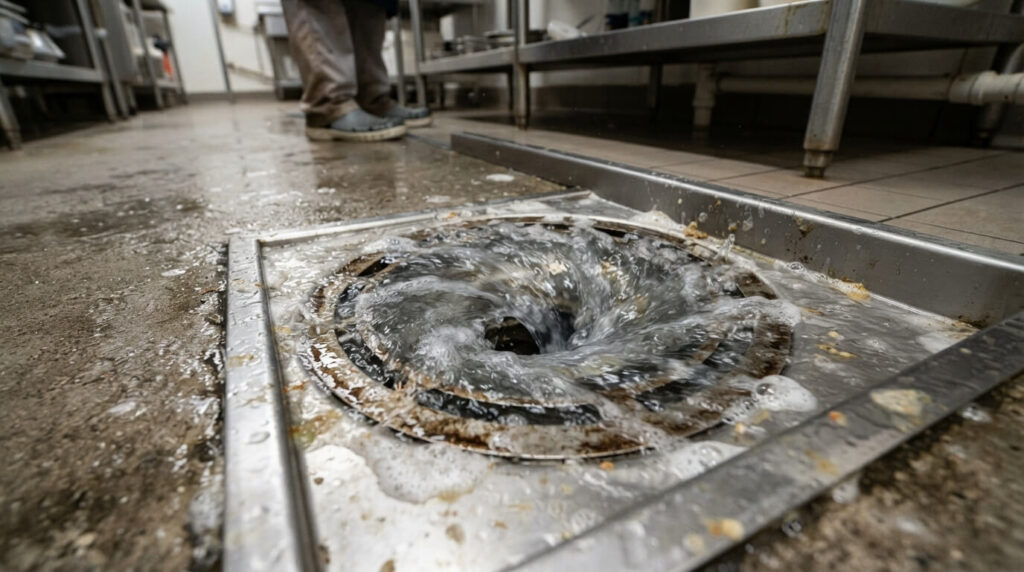
A gurgling drain produces a bubbling, glugging, or choking sound when water moves through a plumbing line. The sound comes from air being pulled through, or pushed back through, standing water in the drain system. It signals that airflow and water flow in the pipes are out of balance.
Drain pipes need both water and air to work correctly. Water moves downward through the drain line, and air from the plumbing vent system replaces the volume of water leaving the pipe. When a clog, a blocked vent, or a damaged sewer line restricts the airflow or the water path, air forces its way through the nearest water barrier, usually the P-trap of a sink, tub, shower, or toilet.
The cause ranges from a minor partial clog in a single fixture drain to a blocked main sewer line that affects the whole house. The fixture that gurgles, the moment the sound occurs, and the other symptoms that accompany it identify which cause applies. A gurgle in one sink usually points to a local clog, while gurgling in several fixtures points to a shared line, a vent, or the sewer.
This article explains what a gurgling drain means, lists its common causes, shows how the sound differs by fixture and trigger, and describes how to judge severity. It then covers repair methods, the conditions that require a licensed plumber, and prevention measures.
What a Gurgling Drain Means
A gurgling drain means that air is moving through water in the drain system because the pipe cannot pass air and water freely at the same time. The sound is the audible result of trapped air escaping through a water seal or bubbling up through draining water.
Residential plumbing combines drain pipes, traps, and vent pipes. Drain pipes carry wastewater away from fixtures, traps hold a water seal that blocks sewer gas from entering the room, and vent pipes connect the drain system to outdoor air, usually through an opening in the roof. A gurgle shows that one of these three components is restricted, empty, or overloaded.
The sound is a symptom rather than a fault. It does not identify a specific defect, and the same noise can originate from a hair clog in a shower drain or a root-blocked sewer line.
How Air and Water Compete in Your Drain Pipes
Air and water compete in drain pipes because a draining column of water displaces air ahead of it and pulls air behind it, and any restriction in the pipe or vent prevents that air from moving freely. The trapped air then pushes through the nearest water seal and produces the gurgling sound.
Wastewater moving down a vertical pipe creates positive pressure ahead of the flow and negative pressure behind it. A working vent system admits outdoor air behind the water to equalize that pressure. With a blocked vent, the negative pressure pulls water out of a P-trap or draws air through it, and the trap makes a gurgling noise as air passes through the water seal.
A partial clog produces the same effect from a different direction. The water slows at the obstruction, and air that cannot pass above or around the water rises through the trap. Pressure changes in the pipe can also siphon the trap water, which removes the barrier against sewer gas.
Gurgling Versus Bubbling: Is There a Difference?
Gurgling and bubbling describe the same mechanism, air moving through water, but gurgling refers to the sound and bubbling refers to visible air rising through the water. Both indicate an air-flow problem in the drain or vent system.
Gurgling is an audible noise heard from a drain opening or from inside a wall while water runs. Bubbling is the visible movement of air through standing water, most often in a toilet bowl, sink basin, or shower drain. A drain can gurgle without visible bubbles when the air passes through a trap out of sight, and a toilet can bubble with little sound.
Bubbling in a toilet or floor drain deserves closer attention than gurgling in a sink, because the toilet and floor drain connect more directly to the main drain line. Bubbles rising in those fixtures when another fixture drains suggest that air is being forced back from the main line.
Common Causes of Gurgling Drains
Five causes account for most gurgling drains: a partial clog in the drain line, a blocked or restricted plumbing vent, a dry or siphoned P-trap, a main sewer line blockage, and a septic tank or municipal sewer issue. The cause determines how many fixtures gurgle and where the repair must occur.
Local causes such as a partial clog or a dry trap affect a single fixture. Shared causes such as a blocked vent or main sewer blockage affect several fixtures that connect to the same branch or line. Septic and municipal issues originate outside the building’s internal piping.
Partial Clog in the Drain Line
A partial clog in the drain line causes gurgling by slowing water flow and forcing trapped air to escape through the P-trap. Hair, soap residue, grease, food particles, and paper products are the most common materials that narrow a drain pipe.
The water in a partially blocked pipe still drains, but more slowly than normal. The slowed water leaves less room for air to pass, and air displaced by the water rises through the fixture instead of through the vent. Gurgling from a partial clog often appears together with slow drainage, and it tends to worsen as debris accumulates.
A partial clog in a branch line affects only the fixtures connected to that branch. Gurgling that occurs in one fixture and follows slow drainage in the same fixture indicates a local obstruction.
Blocked or Restricted Plumbing Vent
A blocked or restricted plumbing vent causes gurgling because the drain system cannot draw in outdoor air, so draining water creates negative pressure that pulls air through the traps. Leaves, bird nests, debris, snow, and ice can obstruct the vent opening on the roof.
A vent can also narrow inside the pipe from corrosion, a collapsed section, or a displaced connection. A restricted vent may allow enough air for light use but fail during high-volume drainage, which produces gurgling only when several fixtures operate together or when a large volume of water drains at once.
Vent blockages typically cause gurgling in more than one fixture, because one vent stack often serves a group of fixtures. Slow drainage may accompany the noise, but the drain pipes themselves remain clear.
Dry or Siphoned P-Trap
A dry or siphoned P-trap causes gurgling because the trap no longer holds a full water seal, so air passes through the curved pipe with little resistance and sewer gas can enter the room. Trap water is lost through evaporation, siphoning, or a leak.
Evaporation affects fixtures that are used rarely, such as guest bathroom sinks, basement floor drains, and unused showers. Siphoning occurs when negative pressure from a vent problem or a long, poorly pitched drain pulls the water out of the trap. A trap seal normally holds a depth of 2 to 4 inches of water, and a siphoned trap drops below that depth.
A dry trap often produces a sewer odor in addition to gurgling. The noise typically appears in one fixture, unless a vent problem caused the siphoning in several traps.
Main Sewer Line Blockage
A main sewer line blockage causes gurgling because wastewater from the whole house cannot exit freely, so air and water back up through the lowest or most accessible fixtures. The main sewer line is the pipe that carries all household wastewater from the building to the septic tank or municipal sewer.
Tree roots, collapsed or offset pipe sections, grease accumulation, and flushed materials such as wipes are the common causes of main line blockage. Older clay, cast-iron, and Orangeburg pipe are more vulnerable to root intrusion and collapse than newer PVC pipe.
Gurgling from a main line blockage usually appears in more than one fixture. It often affects the fixtures closest to the main line first, such as a ground-floor toilet, a basement floor drain, or a shower on the lowest level. Water backing up in a floor drain or toilet indicates a fully developed blockage.
Septic Tank or Municipal Sewer Issues
Septic tank and municipal sewer issues cause gurgling when the tank, drain field, or public sewer cannot accept wastewater, which backs air and water up into the home’s drain lines. These issues originate outside the building, and they affect the whole plumbing system rather than a single fixture.
A full septic tank, a saturated drain field, or a clogged outlet baffle restricts wastewater flow from the house. The U.S. Environmental Protection Agency recommends that a typical household septic system be inspected every three years and pumped every three to five years, depending on tank size and household use. Gurgling that appears along with slow drains throughout the house and soggy ground or odors near the tank points to a septic problem.
Municipal sewer problems include a blocked or overloaded public sewer main, which can occur after heavy rain in systems that receive stormwater. When neighbors report similar symptoms, or when the gurgling begins during storms, the local sewer authority is the appropriate contact.
How Gurgling Differs by Fixture
Gurgling differs by fixture because each fixture has a different trap size, drain connection, and distance from the vent and main line. The fixture that gurgles indicates which section of the drain system is affected.
Fixtures closer to the main drain line react to main line problems sooner, while fixtures with small-diameter drains react more to local clogs. Comparing the gurgling across fixtures helps separate a single-fixture problem from a shared-line problem.
Gurgling Kitchen Sink Drain
A gurgling kitchen sink drain most often results from a grease, food, or soap-residue clog in the sink’s drain line or the garbage disposal outlet. The kitchen sink drain has a 1.5-inch diameter in most homes, and grease that solidifies on the pipe walls narrows it over time.
The gurgle typically appears as the sink empties and may be accompanied by slow drainage and a sour odor. When a dishwasher drains into the same line, the gurgling may intensify during the dishwasher’s drain cycle. A gurgling kitchen sink that occurs with gurgling in other fixtures points beyond the sink to a vent or main line problem.
Gurgling Bathroom Sink
A gurgling bathroom sink most often results from hair, toothpaste, and soap buildup in the drain or from a partial clog in the branch line shared with other bathroom fixtures. The pop-up stopper assembly and the P-trap are the most common collection points for debris.
Bathroom sink drains are narrower than most other household drains, with a typical diameter of 1.25 inches. The narrow diameter allows a modest clog to disrupt airflow quickly. Gurgling in a bathroom sink that coincides with gurgling in the nearby shower or toilet indicates a shared branch line or vent problem.
Gurgling Shower or Bathtub Drain
A gurgling shower or bathtub drain usually results from hair and soap scum accumulating in the drain line, although a shared-line blockage can produce the same sound. Hair forms a mat that catches soap residue and narrows the pipe.
Showers and tubs discharge a large volume of water quickly, which makes airflow problems audible. Gurgling that begins when someone flushes a toilet or runs a sink nearby indicates a shared branch or main line restriction. Gurgling that appears only in the tub or shower, along with standing water around the drain, indicates a local clog.
Gurgling Toilet
A gurgling toilet indicates that air is passing through the water in the bowl or trap, which results from a clog in the toilet drain, a blocked vent, or a main line blockage. The toilet has the largest trap and connects directly to the main drain, so it reveals main line problems earlier than smaller fixtures.
A toilet that gurgles during flushing suggests a partial blockage in the toilet’s own drain or in the line immediately beyond it. A toilet that gurgles or changes water level when other fixtures drain suggests that air is being displaced through the toilet because the main line or vent cannot carry it. A toilet that both gurgles and drains slowly calls for prompt attention, because it often precedes a complete backup.
What the Trigger Tells You About the Cause
The trigger that starts the gurgling tells you which fixtures share the affected pipe section. A gurgle that begins when a second fixture drains indicates that both fixtures connect to the same drain line or vent, and the point where they join narrows the location of the restriction.
Noting which fixture gurgles and which fixture causes it provides more diagnostic information than the sound itself. Recording the pairs helps a plumber locate the problem without opening walls.
Sink Gurgles When the Washing Machine Drains
A sink that gurgles when the washing machine drains indicates a restriction in the shared drain line or vent, because the washing machine discharges a large volume of water quickly and exposes limited airflow capacity. The washer’s pump pushes water into the standpipe faster than a sink or tub normally drains.
The gurgle in the sink occurs because displaced air seeks the nearest trap. A partial clog in the branch line beyond the point where the washer and sink connect, or a restricted vent serving both, produces this pattern. A standpipe that is too short, too narrow, or improperly connected to the vent can also cause gurgling in nearby fixtures.
Toilet Gurgles When the Bathtub Drains
A toilet that gurgles when the bathtub drains indicates a partial blockage or vent restriction in the drain line shared by the toilet and tub. Water leaving the tub pushes air through the line, and that air escapes through the toilet’s water seal.
The toilet bowl may also show a rise or drop in water level, or bubbles, as the tub empties. This trigger pattern places the restriction downstream of the point where the toilet and tub drains join, which is often the bathroom’s branch line or the main line. When the pattern appears in a lowest-floor bathroom, the main line becomes the more likely location.
Shower Drain Gurgles When You Run the Bathroom Sink
A shower drain that gurgles when the bathroom sink runs indicates a partial clog or vent restriction in the branch line that both fixtures share. Water from the sink moves through the shared pipe and displaces air through the shower’s trap, which has the lower resistance.
The shower trap is often the first to gurgle because the shower drain sits at a low point in the bathroom drain arrangement. The pattern confines the problem to the bathroom’s branch line or its vent, and it rules out an isolated clog in the sink or shower drain alone. Gurgling in the shower that also occurs when the toilet is flushed widens the suspected area toward the main line.
Sink Gurgles but Drains Fine
A sink that gurgles but drains fine indicates an early-stage partial clog or a developing vent restriction that has not yet slowed the drainage. Gravity still moves the water through the pipe, but the air exchange is already impaired.
This condition often appears before noticeable slow drainage, which makes it useful as an early warning. The gurgle may be intermittent and may appear only with large volumes of water, such as emptying a full basin. Clearing the drain and checking the vent at this stage is easier and less costly than waiting for a full blockage.
Drain Gurgles When Nothing Is Running
A drain that gurgles when nothing is running indicates that air is moving through a trap because of pressure changes elsewhere in the system, most often a main line or vent problem, or a change in sewer or septic conditions. The sound occurs without local water use because pressure in the pipes changes independently of the fixture.
Wind across a partially blocked vent can change pressure in the vent stack. A blockage in the main sewer line can push trapped air back through the lowest drains. Heavy rain can raise the water level in a municipal sewer or saturate a septic drain field, which pushes air and water back toward the house. Gurgling with no trigger, especially when it occurs in several fixtures or along with sewer odors, calls for inspection of the main line and vent.
How to Tell If a Gurgling Drain Is Serious
A gurgling drain is serious when it affects more than one fixture, occurs with slow drainage or backups, or produces sewer odors. A gurgle limited to one fixture that clears after cleaning is usually minor.
Severity depends on how many fixtures are involved and on whether wastewater is backing up. Comparing the symptoms against the two patterns below helps separate a local issue from a shared-line problem.
Signs of a Single-Fixture Problem
A single-fixture problem shows gurgling and slow drainage in one fixture while all other fixtures drain quietly. The restriction sits within that fixture’s trap or branch drain.
Other signs include standing water in that fixture’s basin, a localized odor, and improvement after plunging or cleaning. A single-fixture problem also shows the same symptom every time that fixture drains, regardless of what other fixtures do. Homeowners can often resolve this pattern without a plumber.
Signs of a Main Line or Vent Problem
A main line or vent problem shows gurgling in multiple fixtures, slow drainage in several drains, and gurgling that one fixture triggers in another. These signs show that the restriction lies in a shared section of the system.
Additional signs include water backing up into the lowest fixtures, such as a basement floor drain or ground-floor shower, when upstairs fixtures drain. Sewer odors in several rooms, a toilet whose water level changes when other fixtures drain, and recurring gurgling after a recent repair also indicate a shared-line cause. Gurgling during a septic or sewer problem may also appear with soggy ground in the yard.
Is a Gurgling Drain Dangerous?
A gurgling drain is not dangerous by itself, but it can indicate conditions that are, including sewer gas entering the home and sewage backup. The hazard depends on the cause.
Sewer gas contains hydrogen sulfide and methane. Hydrogen sulfide produces a rotten-egg smell and irritates the eyes and respiratory system at low concentrations, and methane is flammable at high concentrations in enclosed spaces. A dry trap or a siphoned trap allows these gases into the living space.
A main line blockage can cause raw sewage to back up through floor drains, tubs, and toilets. Sewage contains bacteria, viruses, and parasites, so contact with it and with contaminated surfaces creates a health risk and requires prompt cleanup. Persistent gurgling combined with sewer odors or backup should be treated as a priority.
How to Fix a Gurgling Drain
A gurgling drain is fixed by removing the restriction or restoring the water seal that causes it: clear the clog, refill or clean the P-trap, and check the vent. The correct method depends on the cause identified in the earlier sections.
Start with the least invasive repair and proceed only as needed. When several fixtures gurgle, the vent or main line is the more probable location, and the vent check takes priority over repeated fixture-level clearing.
Clearing a Clog with a Plunger or Drain Snake
Clear a clog by sealing the drain with a plunger and pumping it several times, then use a drain snake to reach clogs that the plunger cannot dislodge. A cup plunger suits sinks, tubs, and showers, and a flange plunger suits toilets.
For a sink or tub, block the overflow opening with a wet cloth so that pressure acts on the clog rather than escaping through the overflow. Cover the plunger cup with water, press to form a seal, and pump with steady strokes for about 15 to 20 seconds. Run water to confirm that the drain flows and the gurgle has stopped.
A drain snake, also called a drain auger, reaches clogs located deeper in the pipe. Feed the cable into the drain, rotate the handle when resistance occurs, and withdraw the cable with the debris. Flush the line with hot water afterward. Chemical drain cleaners can damage some pipes and are unsuitable for septic systems, so mechanical clearing is the safer first method.
Refilling or Cleaning the P-Trap
Refill a dry P-trap by running water into the fixture until the trap fills, and clean a clogged P-trap by removing it and clearing the debris. A refilled trap restores the water seal that blocks sewer gas and stops the air passage that causes gurgling.
For a fixture that is rarely used, pouring a pitcher of water down the drain refills the trap. A trap that refills and then empties again indicates siphoning or a leak, which calls for a vent check or a trap inspection.
To clean a trap, place a bucket under the pipe, loosen the slip nuts by hand or with pliers, and remove the curved section. Clear hair, grease, and debris, rinse the pipe, and reinstall it with the washers seated correctly. Tighten the nuts snugly without overtightening, and run water to check for leaks.
Checking and Clearing the Vent
Check the plumbing vent by inspecting the roof opening for debris, nests, or ice, and clear it with a garden hose or a plumber’s snake. A vent blockage is confirmed when clearing the opening stops the gurgling and restores normal drainage.
Locate the vent pipe, a vertical pipe that extends through the roof, and inspect its opening for leaves, nests, and other obstructions. Remove visible debris by hand. Flush the vent with a garden hose to test for flow. A blockage further down the pipe may need a snake. Roof work carries a fall risk, so a plumber should perform the inspection when the roof is steep, wet, or icy, or when access is unsafe.
Fixing a Gurgling Bathtub Drain
Fix a gurgling bathtub drain by removing the stopper and clearing the hair and soap scum from the drain, then plunging or snaking the line if the gurgling continues. Hair is the most common obstruction in tub drains.
Remove the stopper or strainer, pull out visible hair with a drain-cleaning tool or a bent wire, and run hot water to flush the line. When gurgling continues, seal the overflow cover with a wet cloth and plunge the drain. A drain snake passed through the drain opening reaches clogs farther down the line. A tub that still gurgles after clearing the drain, particularly when other fixtures also gurgle, indicates a shared line or vent problem.
When to Call a Plumber
Call a plumber when the gurgling affects multiple fixtures, persists after clearing the drain, or occurs with sewage backup or sewer odors. These conditions indicate a problem in a shared line, a vent, or the sewer that homeowner tools cannot resolve.
A plumber has the camera inspection equipment, power augers, and diagnostic tools that locate and clear restrictions in sections of pipe that are hidden or hard to reach. Early professional service can also prevent a partial blockage from progressing to a full backup.
Warning Signs You Shouldn’t DIY
Do not attempt a DIY repair when gurgling occurs with sewage backup, multiple gurgling fixtures, persistent sewer odors, or water in floor drains. These signs point to main line, vent, septic, or municipal sewer problems.
Additional warning signs include recurring gurgling after clearing the drain, a toilet whose water level rises and falls when other fixtures drain, and gurgling that begins after heavy rain. A suspected roof vent blockage on an unsafe roof, and any gurgling in a home on a septic system, also call for professional service. Chemical drain cleaners should not be poured into a fully blocked line, because the liquid can stand in the pipe and create a hazard for the person who later opens it.
What a Plumber Will Check
A plumber checks the affected fixtures, the traps, the vent system, and the main sewer line to locate the restriction, and uses a camera inspection to view the pipe interior. The inspection starts with the pattern of gurgling that the homeowner reports.
The plumber typically tests which fixtures gurgle and under what triggers, and inspects the traps for water seal and debris. The vent system is checked at the roof and within the pipe for blockage or damage. A sewer camera shows roots, collapsed sections, offsets, grease buildup, and foreign objects in the main line. A smoke test or a pressure test can find vent leaks and broken sections, and a septic tank inspection evaluates tank levels and outlet flow. When the inspection points to the municipal sewer, the plumber refers the homeowner to the local sewer authority.
How to Prevent Gurgling Drains
Prevent gurgling drains by keeping debris and grease out of the pipes, maintaining the traps, and inspecting the vents and sewer line on a regular schedule. Prevention reduces the partial clogs and vent blockages that produce most gurgling.
Use hair catchers in showers, tubs, and bathroom sinks, and scrape food scraps into the trash instead of the kitchen drain. Dispose of cooking grease in a container rather than pouring it down the sink, because grease cools and solidifies on the pipe walls. Flush only human waste and toilet paper, and keep wipes, feminine products, and paper towels out of the toilet, including products labeled flushable.
Run water in rarely used fixtures, such as guest bathroom sinks and basement floor drains, about once a month to keep the P-trap filled. Flush drains periodically with hot water and clean pop-up stoppers and traps when debris accumulates. Choose mechanical clearing over chemical drain cleaners, which can damage some pipe materials and are unsuitable for septic systems.
Inspect the roof vent each year, and after storms, for leaves, nests, and ice. Keep tree roots away from the sewer line, and schedule a camera inspection of older clay, cast-iron, or Orangeburg sewer lines to detect early root intrusion or damage. Homes with septic systems should follow a regular pumping and inspection schedule, which the EPA sets at an inspection every three years and pumping every three to five years for a typical household.